Travel - Chicago to Emeryville on the California Zephyr

Hi everyone!  My name is David and this is my first post on the Opera Fantastique blog.  It is also the first post I know of that doesn’t have anything to do with opera, but hopefully it is no less fantastic than any of Thomas’.  My focus will be more on food and travel, as I have little knowledge about opera.  I am without a doubt a major foodie, but am also an enthusiastic traveler to places both old and new – 58 countries and counting! 

I’m currently based in Chicago, and since I was young, one of my dreams was to ride the train across the continental United States, and I was recently finally able to fulfill that dream. 
(As an aside, my first post is about 6 months late.  I was meant to write about another trip I made to Jordan, but things got in the way, and so my first post will be about a trip that’s only 1 month old, rather than 6 months old.  Sorry Thomas.  Better late than never, as they say.)

In any case, one of the most famous train rides in America is run by Amtrak and runs from Chicago to Emeryville (which is a town near San Francisco, on the other side of the bay).  It’s called the California Zephyr, and from the moment I heard the name, I knew that it was a train ride I wanted to do, not least because the train traverses some of the best scenery the continent has to offer. 
I bought the tickets about 2 weeks ahead of time from Amtrak’s website, and selected the Superliner Roomette option.  There are three options on a multi-day journey such as this one – a standard train car seat, the Superliner Roomette and the Superliner Bedroom.  The Superliner Roomette and Bedroom both include meals in the ticket and a lot more privacy, with the difference being the Roomette offers space for only two people, while the Bedroom can fit four and has its own private shower.  Since I was travelling by myself for 52 hours, the Roomette seemed like the best option.  Gotta treat yo’self once in a while. 

The dining car, which is surprisingly nice.  Food was decent as well - big hit were the crab cakes and American breakfast.  It's communal seating, so a solo traveller like myself gets lumped in with other strangers.  


I boarded the train in Chicago on Thursday afternoon and made my way to my car.  Each cabin has its own attendant whose job is to take care of any emergencies you have and to turn down the bed in the evening when you sleep.  The room was about 4 feet wide, so it was actually difficult to sit and fit my carryon in the space provided – the attendant took one look at my suitcase and asked me, “First time, huh?  I can tell.”  Thankfully, as I was travelling by myself, the space constraints weren’t that bad. 
On Thursday, the train makes its way through Illinois, Iowa, and arrives in Nebraska in the evening.  In terms of scenery, here is what you need to know:  there is none.  Let’s move on. 

(Just kidding.  But it’s mostly farmland.  I think I read a book in the car most of the afternoon.  We did pass the Continental Divide somewhere in Illinois, which is quite interesting.) 

Typical view from the train on Friday.


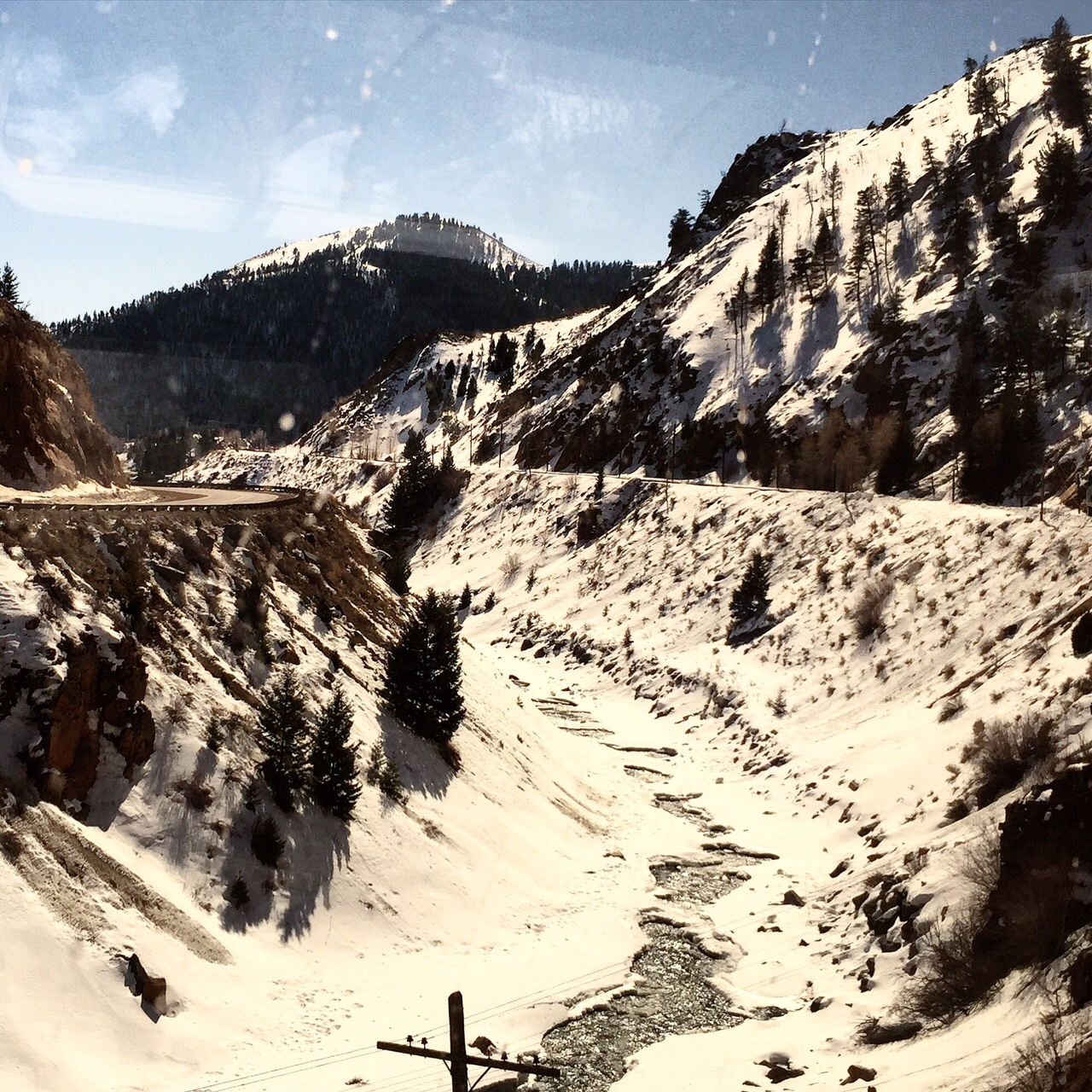
On Friday morning, we arrived in Denver and after picking up more passengers, we made our way up the Rockies, with the train coursing its way through canyon after canyon and following the Colorado River as the train makes it way up to 9,000 feet in elevation.  It was spectacular to say the least.  And this was only the morning scenery.  I highly recommend making the trip in the winter if you like snow as part of the scenery – I’m sure it looks amazing in the summer too with all the lushness of the forest, but there’s something magical about winter scenery for me. 

Making its way up the Rockies.


On these long train rides, there is a single car that is devoted to “sightseeing” – the lounge car.  It boasts floor to ceiling windows so you can see outside and appreciate the vastness and scale of the mountains and rivers around you.  I pretty much parked myself here all Friday.  There’s no wifi on the California Zephyr, and since you are in the mountains there’s no cell phone service either, but it hardly matters on a trip like this.  I was able to get over my lack of Instagramming abilities reasonably quickly. 


The train tracks are to the right, following the snow-covered Colorado River.


After lunch, the train then heads down the mountains and into Utah, which is where the scenery shifts dramatically and quickly from mountains to desert.  The train made its way through Ruby Canyon, which is just as spectacular as the Rockies but in a completely different way.  There’s something about the Western United States that is just magical.  In the afternoon, the conductor also came into the lounge car and started pointing landmarks to us along the way – without him, I wouldn’t have been able to spot Monument Valley and Arches National Park way in the distance.  Another time, perhaps. 

Typical view from Ruby Canyon.


By the evening, the train arrives in Salt Lake City, and I set myself down for the second night on the train.  The Roomette consists of two seats facing each other, which at night flatten to make a single bed that is for one person.  And I mean one person.  Like, don’t even try.  The room does fit two, though, because above the seats is a platform that can be pulled down to serve as the top bunk.  Feel sorry for that guy though. 

Also, bring an extension cord because there's only one plug in the entire Roomette.


When I woke up Saturday morning, we are already in Nevada, and stopping in Reno in the morning.  After that the scenery quickly shifted back from desert to mountains as the train made its way up the Sierra Nevadas, following the Truckee River.  It’s honestly hard to say which I found prettier – the Sierra Nevadas or the Rockies - but they are indeed different types of vistas and landscapes.  Whereas the train basically has 2 feet of space on either side while going through the Rockies, it hugs the cliffside for most of its trip through the Sierra Nevadas, and in that sense there is more open space to appreciate the vastness of the landscape.  There is no right or wrong in that sense, but just heaps and heaps of natural beauty. 

One of the best views I ever woke up to.  This is from my bedroom window.


By lunch, we had started descending the mountains and I arrived in Emeryville by 3 pm – 1 hour ahead of schedule.

Making our way up to the Sierra Nevadas, following the Truckee River.


The view near Donner Lake.


In retrospect, those looking for a shorter journey would do well to start in Denver instead, because that's when the scenery really starts.  But those who enjoy spending nights on trains should definitely do it end to end starting in Chicago.  52 hours on a train isn’t for everyone, but I definitely caught the train bug, and look forward to the next long-distance trip on Amtrak.


Review - 2016 Hong Kong Arts Festival - Simon Boccanegra (Verdi), Teatro Regio di Torino, Hong Kong Cultural Centre Grand Theatre, 28 February 2016 & 1 March 2016

Simon Boccanegra - Roberto Frontali (28 February 2016) / Alberto Gazale (1 March 2016)
Maria Boccanegra - Erika Grimaldi
Jacopo Fiesco - Michele Pertusi
Gabriele Adorno - Giorgio Berrugi
Paolo - Gevorg Hakobyan
Pietro - Fabrizio Beggi

Orchestra and Chorus of Teatro Regio Torino
Conductor - Roberto Abbado
Director - Sylvano Bussotti (Revival by Vittorio Borrelli)


I had encountered Simon Boccanegra in my opera going experience more than other popular works by Verdi like La Traviata, but the third viewing is still far from ideal. This revival of Bussotti's production from the 1970s with a recent revamp retain the feature of 'grand' scene settings and elaborate period costumes. Visually the staging made some impact in the council chamber scene with a rich blue mosaic backdrop alike the great hall of a Byzantine palace. Wave machine was employed to produce the coastline of Genoa in the background. Those after the grandeur of a stage set and argue opera should retain historical relevancy will probably applaud and enjoy.

However, I am not convince that the 'park and sing' choreography and stage set as backdrop would enhance the audience understanding of this opera. Genoa's ruling class is a microscope of the obstacles challenging Italy before and after unification. Unlike Rigoletto, it is also not so much about a class conflict but an ongoing bloodshed between local clad, which composer despised its existence into the unified Italy. Local hostile divisions and lacking the vision of a unified nation posed instability to the course of Risorgimento. One could argue the political tension is already demonstrated by the angry crowds in council chamber scene, councillor’s rivalry and plotted against the doge throughout the opera. But lavish costume and scene set are a display of quality workmanship than a visual realisation of the underlying message, neither establishing the theatrical atmosphere.

The complicated background of Amelia, or Maria, being kept away from knowing as the daughter of Simon, granddaughter of Simon's rival Jacopo, and Amelia's mother as the missing character, were also left to the audience doing detective work from the translated surtitles. I understand not everyone would enjoy the French opera director Olivier Py's approach in portraying every single details of the story in his production. Though his approach in Il Trovatore with extras to act out the troubled memory narrated by Manrico's mother fed the audience with background information, which I reckon is essential for staging Verdi's operas when we want to understand the recurring inner personal theme between father and daughter.

If theatrically the staging did not elevate an insight of the story, musically it would require a stellar vocal cast to keep the ears interesting. The line up from Turin Opera were generally technically competent and no ugly voice, but far from making an impression as a whole. Erika Grimaldi was so far the better Amelia I came across in live with the sheer impact in volume and note accuracy. But I found her timbre more a dramatic soprano than a spinto, which lacked the lyrical side of a soft spoken 'Gilda' in this tale. Giorgio Berrugi, who sang the role of Amelia's passionate lover Gabriele, was shaky with intonation in the second act big solo aria 'Cielo pietoso, rendila' and fell short from a climatic showcase. Same problem with singers as protagonist and Jacopo on different evenings that their timbre more suited in the dramatic first act, but lacked the warmth in tone desired in the expressive second half. I was disappointed by the baritone duet in the reconciliation scene that neither moving nor processing any radiant quality. Diction was generally passable though not Italianate enough, which probably suggested why the singing rather white hot in colour. Roberto Abbado should be credited for keeping the band together and very alert to the singer's rubato. The brass and wind sections were better than the strings for rhythmical precision and produced a rich body of sound. Tempo was generally on a broad side to keep tutti moments polished and elegant, but gradually sounded tiring for the ears and losing the momentum towards the end. 

Review - The Six Brandenburg Concertos (J S Bach), Hong Kong City Hall, 5th February 2016


Members of the Hong Kong Philharmonic Orchestra
Directed from the Harpsichord by Benjamin Bayl

Nearly a year apart after the performance by Berliner Barock Solisten in The University of Hong Kong, another demonstration of Bach's Brandenburg Concertos was given by the members of Philharmonic Orchestra. Except the harpsichord, no other period instrument such as recorder or baroque flute was used this time, neither baroque bows for the strings. Also less vibrato in playing to aim for a more silvery and pure tone. The sequence was also in reverse order starting with the second concerto and ended the concert with the first. Strings only third and sixth concertos filled the mid section of both half, leaving the leaner structured fifth and fourth concerts before and after the intermission. I felt it was the right order for the programme with a fanfare like concerto to open the concert, the mid section being intimate and pastoral orientated, rounded off with the concerto that had the largest instrumentation of all.

Instead of an earthy and percussive sound from a period instrumental group, generally this time ensemble produced a more refine tone and being transparent in structure. It would be unfair to compare which combination is better because different sets of tone colours. Though I would prefer to retain recorders for the fourth and viola da gambas for the sixth, which was not difficult to realise the composer intended these instruments for a colourful musical texture. The variety of instrumental colours would also keep the music more interesting for the ears.

Technically this around the musicians were more even and at ease than an effortful marathon. With the conductor directed from harpsichord, the solo violinist could concentrate on playing the solo passages and avoid tiredness than performing two roles at the same time, a notable problem in period instrument performances I experienced in recent years. Jing Wang's intonation on the violin improved as the evening went on and never aggressive on bow weight in technically demanding passages especially the fourth concerto. Benjamin Bayl excelled himself in the virtuosic cadenza on the keyboard at the first movement of the fifth concerto. His approach in keyboard playing was quite swift in tempo and the phrasing had a dramatic sense for musical direction.

In terms of the quality of playing, as I was told with limited rehearsals, there were highs and lows in result. To begin the concert with the sixth concerto was a challenge for the solo trumpeter Joshua MacCluer to nail the fiendish showcase passages, not to mention playing the piccolo trumpet in F. He played most of the notes accurately despite some slips in the top and appeared rather relieved when it was over. There was also some issue with balance that the upper strings being heavy handed in volume and overshadowed the soloists. More thought on phrasing and intonation were actually put into concertos with less instruments. Exquisite playing during the trio with violin, flute and harpsichord in the second movement of the fifth concerto, particularly from the flautist Megan Sterling. The first concerto was somehow an uneven display that the wind section were far more accurate and functioned as a group than the tutti strings. Few more rehearsals would have polished the rough corners for a better impression. 

Review - Die Walküre (Wagner), Hong Kong Cultural Centre Concert Hall, 23 January 2016

Siegmund - Stuart Skelton
Sieglinde - Heidi Melton
Hunding - Falk Struckmann
Wotan - Matthias Goerne
Brünnhilde - Petra Lang
Fricka - Michelle DeYoung
Die Walküren - Sarah Castle, Karen Foster, Katherine Broderick, Anna Burford, Elaine McKrill, Okka von der Damerau, Laura Nykänen

Hong Kong Philharmonic Orchestra
Jaap van Zweden (Conductor)


In contrast to Das Rheingold, which highlights the broad issues of greed, power thirsting, hatred and race supremacy, Die Walküre focuses on the dilemma and consequences that Wotan meets in attempt to protect the legacy of gods from the inevitable downfall. While the head of authority bears the duty to defend oaths, upholding laws and honouring promises, the moral dimension of siblings falling in love for each other, breeding offsprings with other women than the lawful partner, and distance manipulation of own children to achieve personal goals all became a tangled web.

Albeit my rather naive understanding of the work philosophy, I gradually believe that the main underlying message is not only a mirror reflection of the composer own struggles, but also how oneself negotiates with life when it evolves rather different from expectations and the plan. The composer's answer to the question by love/humanity/forgiveness is not straight forward and with a price: Siegmund was killed indirectly by Wotan through Hunding, forcing his daughter Sieglinde into hiding at dangerous area and punished the loyal Brünnhilde with the loss of immortality. The underlying message is that no one could avoid the difficult corners in life even with power, might and wisdom. On the other hand, Wotan’s tolerance of sibling’s passionate love and freewill to live as a liberal being were a progressive stance even for modern world. 

The philosophical complexity of the work also posed a challenge to the audience when this performance was presented as a concert version without the visual theatrical presentation. Unless one studied the plot thoroughly, this time the music language not necessarily painting the landscape and surroundings alike in Das Rheingold, but expressions of atmosphere, senses and inner emotions instead. Moments like Wotan killing Hunding at rage and ride of the Valkyries would be easier to visualise by physical actions than realising through the words. That also would help the singers to build their characterisation than standing still on stage. The acoustic between a concert hall and an auditorium of a theatre also made a different audio experience. It allowed musicians the space to make a bigger contrast in dynamic difference and the space for the music to sing more its beauty. Also without the obligation to maintain the theatrical momentum on stage, a broader tempo could be adopted to phrase the music but not dragging. The end result was more refined musical texture and a better sense of intimacy.


As a whole, the performance had exceeded my expectation and maintained the exact standard set as previously in Das Rheingold. Radiant singing from Stuart Skelton’s Siegmund that the tessitura sat comfortably within his vocal range, also an attractive timbre with the desired warmth, smoothness and vocal projection. Interestingly, he and Heidi Melton both took a rather broad tempo for act one, and each word was steadily phrased for a clear diction purpose. A poetic reading was the description, but for my waste it was slightly careful and they could have pushed the tempo slightly from Winterstürme towards the passionate climatic end. Melton was rich in mid range though silvery on the top, which I felt her timbre more suitable for Chrysothemis in Elektra than the more mezzo soprano orientated Sieglinde. Falk Struckmann as Hunding filled the hall with a rich body bass tone and I reckon he would be a better Wotan than Matthias Goerne. Petra Lang sang the Hojotoho of act two beginning rather brilliantly and produced that youthful fearless spirit of Brünnhilde. High vocal range fared better for her but some degree of unnaturalness of her singing style in mid range. Diction was often not too clear at that level and sometimes sliding one notes to another diminished the beauty in tone. The lower range was also audibly soft but the acoustic still helped to maintain the vocal presence. Michelle DeYoung made a fearsome Fricka with a sheer body of vocal volume and captured the essence of an angry wife vividly. The timbre of Walküren complimented each other effectively and one could detect several future potentials as lead Wagnerian singers for future. 

However, like last year, Matthias Goerne’s Wotan continued to be a let down from rest of the cast. I would not be too critical if it was not recorded for commercial release and understood it was a starting point for the role in future. Though it did not help when Goerne continued to dive in the score while singing and lacked visual communications with his colleagues. He was still far from identifying the structure to phrase the text and music in act two that virtually lacked any sense of characterisation while the role of Wotan was so important in this work. His rather dense texture in timbre also made the singing sounded a murmur and lacking difference in vocal colour. He was better in act three which the music seems more familiar to him and at least he would look up and sing to the audience. Still I wonder how he would eventually make an impressive debut in future at an actual production performance if there was not much of an improvement from last year outing.
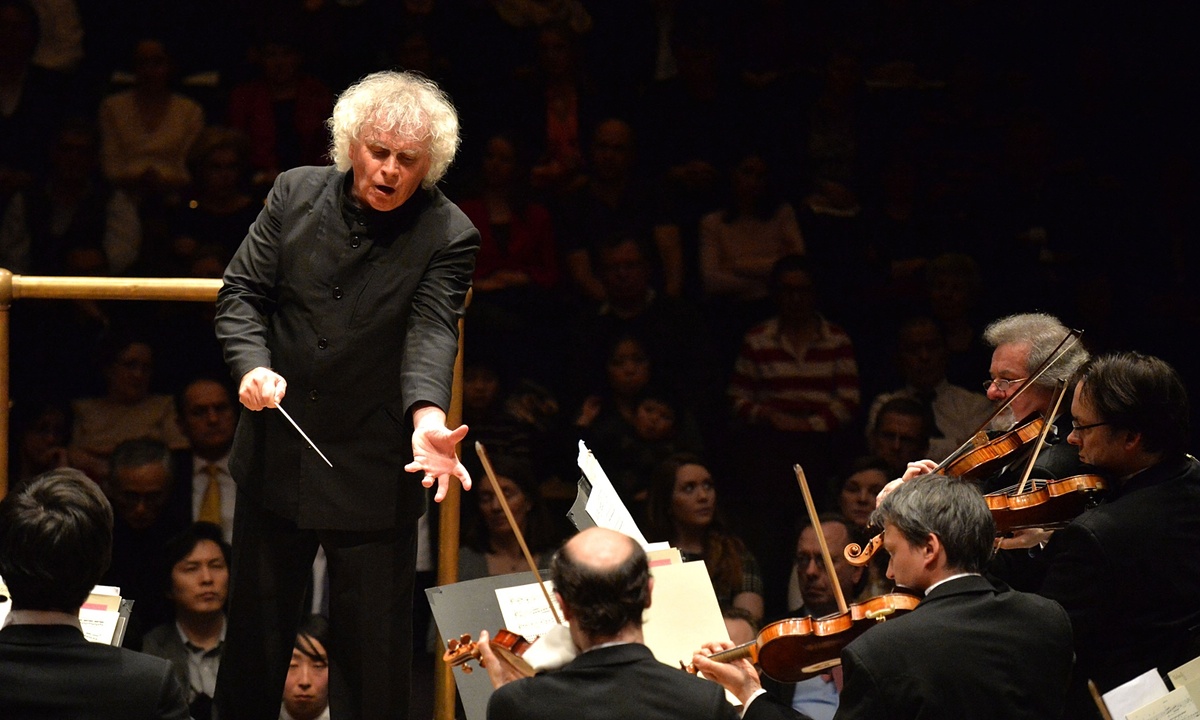

The Philharmonic Orchestra was reinforced by a number of overseas players, particularly in the brass. It was an impressive sight to see six harps on the stage and at a concert performance one could have a better sense how the ensemble functioned together than at an opera house pit. I felt the orchestra was more well prepared in act two and three than the first. The roadmap was there and Zweden kept a good sense of flow that neither rushing or too slow, which accommodated the singers comfortably with the highly disciplined orchestral accompaniment. The band produced many beautiful moments especially in the emotional Wotan’s farewell and magic fire music. Again the rather Italianate warm tone somehow slightly too positive for the bleak setting of act one in hunding’s house. Though I really enjoyed rest of it that the leaner body of sound was refreshing and even had a sense of hope despite all the woes on the way. I am looking forward to the next instalment in a year’s time and hopefully a competent tenor will be sourced for the role of Siegfried.

Review - Symphonies Nos 1-9 (Beethoven), Hong Kong Cultural Centre Concert Hall, 11, 18, 27 November & 4 December 2015


Symphonies Nos 1-9 (Beethoven)

Soprano - Zhou Yuqian
Mezzo Soprano - Deborah Humble
Tenor - Charles Reid
Bass - Kwangchul Youn
The Chorus of the National Centre for the Performing Arts, Beijing
Hong Kong Philharmonic Orchestra
Conductor - Jaap van Zweden

The Hong Kong cycle of the Beethoven Symphonies in the past month was another landmark development of the Philharmonic Orchestra. The strings sections had improved in tone colour and body of sound since Jaap van Zweden took over the directorship since 2012. Though tiredness sunk in as the week progressed and the musicians' stamina were tested. The wind sections did not always maintain the same consistency and responsiveness in playing as the strings which resulted in some untidy corners. The phrasing of music was good generally and in style to the textures of each symphony. I was relieved that Zweden did not repeat the heavy handed execution of Mozart's Symphony No. 40 few months ago with controlled conducting style and employed overpowering dynamics. He knew the road map mostly well enough of navigating the band through the marathon. His conducting style certainly worked better with certain symphonies but not a solution for all.

The cycle first began with the eighth symphony followed by the third, which supposedly to mark the contrasting themes during the composer's midlife creative period. The orchestral playing in the eighth delivered the warmth and a lively pastoral image with an Italianate flair. The strength of Zweden's conducting was that he allowed the space for the music to sing and breath, but never drag and maintained the level of momentum with a rather brisk tempo. It was a satisfying start, but later using the same approach on the third symphony, I felt it ignored the underlying ideology. The playing was polished and fine but made no contrast made in the produced tone and tempo spacing. One wondered where was the image of Prometheus, the mystical hero expressed as resistance to tyranny, when the funeral match sounded ever so positive without the feeling of lament or suffering. A monumental creation of a hero with great sentiments was not necessary but the outlook and philosophy should not be in absence. Neither the conductor nor the orchestra seems to grasp the thinking but only to structure the work just like the rest they came across.


The same problem continued with the Pastoral symphony in the following week, which the drawing board for programmed symphonies happened to be the weak point for the conductor and the orchestra. The playing was neat but it lacked a direction. The absence of momentum resulted in sluggish dialogues between sections and as a whole failed to craft the structure, despite some beautiful passages from the flautist. When the heart was not in place, one could hear the produced tone colour from the strings sounded bland and dull. It was not disastrous but created a misconception among the audience that the symphony failed to make a strong impression as the seventh during interval. Neither should both works be compared easily since the Pastoral symphony stood on its own to emphasise the rare tranquillity and calm mental state of the composer, instead of the tempest and thunderstorm came under the conflictive inner emotions.

By contrast, the seventh symphony in the second half was a success and brilliant as always. The orchestra was at home here. Varied tone colours, energy, phrasing and musical direction were all in display. It created the sense of drama and excitement that marked the characters of this symphony. After the confident and highly spirited first movement, the band gradually built up the pace from the solemn match in the second movement before reaching the climatic exultation in the last movement, which one felt the composer wholeheartedly thrilled about. Zweden's conducting also transformed that he knew where to indicate the orchestra and achieved the desired effects. The only minor problem was the trumpets occasionally under the pitch and I wondered whether it was necessary to use the German rotary ones than the usual B flat type.


The next instalment brought the second, fourth and fifth symphonies together. Besides being a stamina test to play three works in the same evening, more importantly, the compositional progression that Beethoven linked his suffering from deafness with inner emotional struggles. Both the second and fourth had a mysterious sombre like introduction before the return of optimism. Not so much in the style of some late Haydn's symphonies, but signs of the composer's depression battled against the effects of hearing impairment were there. By the last movement of the fourth symphony, showers of semiquavers at break neck tempo seems to suggest the composer not in the best of psychological state. After years listening to various performances of the fifth symphony, it was the first time I felt the work was not a natural triumphant for the composer to overcome the problem of hearing loss, but instead a forceful personal statement to hold the vulnerable mind together with a desperate optimism. On the other hand, the composer eventually found his 'voice' in the symphonies from the struggles and sufferings.

On the performance side it was the evening that the Philharmonic Orchestra managed to maintain the same consistency throughout their playing despite the physical challenge, and Zweden knew the three works well enough to provide a clear guide with his conducting. The woodwind section was also at their best form in this cycle with many fine playings and the presence of an intimate musical dialogues that not often the case. It was not surprised that the first violins gradually showing signs of tiredness with one or two tutti moments being fractions behind from the rest. Otherwise, musically it was an inspiring evening and the tale centred around the composer being vividly realised.


The final instalment was on purpose a contrast between the early and late periods of the composer's compositional style, but both the first and the ninth symphonies were also revolutionary in musical form and language. The first was not so much different in characters from the eighth. The Italianate warmth and pastoral image at harvest time summed up a happier time for Beethoven at his youthful years. The traditional first movement structure was placed in the last movement instead whereas the bold passionate opening movement echoing the styles of Mozart's late symphonies. Just like the eighth, the musical texture and tone colours worked very well to the core produced sound of the orchestra. The playing was never aggressive or overpowering and retained the sense of elegance and beauty that fitted perfectly into the pastoral scene. The band seems natural of its musical dialogues and Zweden was visibly pleased with the result at the end of first half.

The ninth symphony often only remembered by rousing choral passages in the last movement but what made it differed from other symphonies were the harmonic texture and structural progression. The first movement no longer in the shadow of classical period that major and minor keys interwoven together. Scherzo formed the second movement followed by an expressive and tranquil Adagio in the third movement. The tempo Zweden took in the first two movements were rather robust and swift. He pushed the orchestra to produce the momentum alike mounting on a chariot, and there were corners I felt the orchestral playing being unsettled and even sounded angry. Despite a rich body of sound resulted from the darker tone on the strings, the playing of the first violins made a raw sound that lost some of the silkiness it produced before. The NCPA chorus was fine in vocal volume and intonation, but mostly only vowels could be heard and difficult to make sense of their diction. The soprano soloist Zhou Yuqian was a last minute replacement and just about to match her colleagues in the quartet. I would still prefer to hear Deborah Humble and Kwangchul Youn singing other pieces in slower tempo than the machine gun like vocal sections of this symphony. Zweden's energetic conducting also caused some uncertain entries that the soloists were not together with the orchestra. Here the stirring coda felt to be an earthy celebration of ideology Beethoven believed in since Eroica Symphony but not quite the culmination marking the groundbreaking expression of the musical form.

Overall, I felt very inspired by this Beethoven cycle and the orchestra should congratulate themselves how much it had progressed all this years to achieve the current standard. Though more works need to be done on the brass and woodwinds to match the quality and consistency among the strings if it aims to improve further.


Review - The 12 Cellists of the Berliner Philharmoniker, Philharmonie, 19 October 2015


Heitor Villa-Lobos - Bachianas brasileiras No. 1
Gabriel Fauré - Sicilienne from the Pelléas et Mélisande Suite
Gabriel Fauré - Berceuse from the Dolly Suite
Heitor Villa-Lobos - Bachianas brasileiras No. 5
Astor Piazzolla - Lunfardo (arr. for cello ensemble by Harold Noben)
Astor Piazzolla - Libertango (arr. for cello ensemble by José Carlí)
Astor Piazzolla - Revirado (arr. for cello ensemble by David Riniker)
José Carlí - Estampas de Palermo: No. 3 La Diquera (arr. for cello ensemble)
Astor Piazzolla - Adiós Nonino (arr. for cello ensemble by Julio Medaglia and Jacques Ammon)
Astor Piazzolla - Soledad (arr. for cello ensemble by Ludwig Quandt)
Horacio Salgán - A Don Agustín Bardi (arr. for cello ensemble by David Riniker)
Astor Piazzolla - Escualo (arr. for cello ensemble by David Riniker)
Astor Piazzolla - Tres minutos con la realidad (arr. for cello ensemble by David Riniker)

Soprano - Anna Prohaska
Dancers - Laura Fernández and Daniel Orellana


Originally I thought to mark the last night of my first stay in Berlin with a chamber concert would be a tame end, but the performance turned out to be one of the most enjoyable musical evenings. Items on first half of the concert were more in the category of 'serious music' and French influenced. One would need to concentrate and understand the musical language, but also to appreciate the beauty and unique harmonic structure by Villa-Lobos. In contrast, the second half focused more on rhythmic movements and melodic tunes. The music were sophisticated in its own way and never pedestrian neither hints of vulgarity. The arrangements for cello ensemble were appropriately selected and retained the sparkles and virtuosic display. On the programme Fauré's Sicilienne and the fifth set of Villa-Lobos Bachianas brasileiras were most familiar to me. When I heard Piazzolla's Libertango and Adiós Nonino, I felt ignorant not to take notice of the foremost Argentine Tango composer before. The majestic tone of the cellos enhanced the beauty of musical colour and emotions . The twelve musicians were technically superb by demonstrating a diverse tone colours in their playing, also maintained the momentum and musical shape. Anna Prohaska was spotted on with the intonation and the timbre to match the exotic colour in Bachianas brasileiras No. 5, but I was not too convinced by her diction and slightly lacking the drive of emotion in her singing. The dancers gradually unleashed the fireworks in passionate movements as the second half went on. The tango 'flair' in the music came to life visually and the dazzling outfits added a variety of colours onto the stage. As a whole, it was a well planned concert with the delights of musical discovery.

Review - Nabucco (Verdi), Deutsche Oper Berlin, 17 October 2015


Nabucco - Dalibor Jenis
Ismaele - Attilio Glaser
Zaccaria - Liang Li
Abigaille - Francesca Mondanaro
Fenena - Ronnita Miller
Oberpriester des Baal - Marko Mimica
Abdallo - Gideon Poppe
Anna - Nicole Haslett

Chor & Orchester der Deutschen Oper Berlin
Conductor - Ivan Repusic
Director - Keith Warner


My previous and also the first live experience of Nabucco was Daniel Slater's production at Flemish Opera in 2013. The directorial approach focused on the moral question of greed and the public against those in power with reference to the Occupied Wall Street movement. The relevancy to contemporary affair was effective at the time but I agreed with my friend that this staging by Keith Warner would probably stand the test of time. The main focus was on Christian philosophy in the old testament that cast out the false idol and turned to one God or would be punished. Warner saw this opera alike a 19th century oratorio regarding religious moral dimension than the double message to rebuild a nation from broken states. When Nabucco putting on the gold mast and claimed himself above god, he suddenly became mad and unable to prevent the coup d'etat by Abigaille claiming the throne. Though he represented the one with righteous when regained senses, repent his sins by liberating the Israelites from execution and acknowledged their faith. In contrast, Abigaille not only lost her regal status but too late to repent and casted out from Jerusalem. Although she did all the wrongdoings, there was a degree of sympathy that one would realise the situation forced her to make all the bad moves and as a daughter of the slave. There was also a silent role in this production probably a representation of God himself.  An elderly man first pushed the steel structure apart to reveal the interior and disappeared when the Israelites began to congregate at the invasion of Babylonians. He reappeared when Nabucco claimed to be greater than God and pulled out a barrier while the monarch was punished by turning into a mad king. Towards the end he shut the structure when Abigaille was banished. 


Compare to the stage set of Lucia in previous evening merely as a backdrop, theatrically this production created the dramatic intensity and attentions to bring out the central theme of each scene. At the beginning, we saw a large erected moveable structure made by steel to represent the great walls of Jerusalem. The smoke effect coming from the top with stage lights created a dense and heavy atmosphere, which further attracted the audience curiosity to find out the secret behind the wall. Interestingly, the Israelites all wore black in the fashion of late 19th century except the Kohen, who wore Bukharan kippah but strangely a scarf instead of tallit with black stripes. Leaving the accuracy of religious clothing aside, the Jews here were portrayed as a close group that saw anyone did not turn to their belief as outsider, and men particularly as fanatics praying around the wall of a black room fervently, which was probably a reference to the temple of Jerusalem. The throne of Nabucco sat inside a watch tower with a stair and gold paint on the wall. The outlook stood out from the dark stage, also the simplistic and stylish appearance was effective than any attempt of historical replication of a throne room. The hanging ropes in the execution scene with Israelites sat in rows awaiting their death sentence sent down the emotion of fears and chilling atmosphere in an execution room. The key success I felt altogether was the seamless scene change that the gigantic sets could move in different ways without losing the dramatic flow, and the display of stage machinery was a spectacle that not many opera productions could manage. 


In this performance the male soloists were better than ladies with the singing. Dalibor Jenis's timbre had that darker tone colour than normal baritones that enhanced the vocal richness with a good projection. His musical phrasing was appropriately executed and one of those singers I would want to hear again in future. His physical outlook and acting also suited to the portrayal of Nabucco as a young and troubled monarch in this production. Liang Li was also looked ideal in the role of Zaccaria as priest to the Israelites. Good vocal projection and the singing was not forceful but pleasant as a bass. Francesca Mondanaro was a good actress by giving an intense display of conspirator claiming the throne of Nabucco for her own defence and the subsequent downfall as a rejected ruler. Though her singing deteriorated as the evening went on with intonation problem on high vocal register and not a voice to listen long. Attilio Glaser was better but her role had only one aria to showcase and did not make much an impression. The chorus delivered a heartfelt and beautiful account of the chorus of Hebrew slaves. Generally the choir was secured with intonation, lesser vibrato and delivered the body of sound to fill the house. Ivan Repusic was less controlling with his conducting than Filippo Sanjust. Even so, the orchestral playing did not lose any signs of energy, the tempo change between scenes were natural and not abrupt. The accompaniment never overpowered the singers in volume and being responsive to the conducting.


Review - Lucia di Lammermoor (Donizetti), Deutsche Oper Berlin, 16 October 2015

(Production photo from a previous performance in 2009)
Lucia - Pretty Yende
Enrico - Marco Caria
Edgardo - Yosep Kang
Arturo - Attilio Glaser
Raimondo - Marko Mimica
Alice - Irene Roberts
Normanno - Jörg Schörner

Chor & Orchester der Deutschen Oper Berlin
Conductor - Daniel Cohen
Director - Filippo Sanjust

Among all the opera productions I saw in Berlin, this staging of Lucia by Filippo Sanjust first premièred in 1980 was the most conventional. A predominantly older generations turned out in the audience was not a surprise. It was the kind of evening for connection to the past and 'comfortable' if one rather passive with theatrical experience. At the overture, we saw the painted image of a pale white Lucia in the midst of darkened cloud surrounded by stage curtains. An open field followed with rest of the scenes shown under the high ceiling with a gothic interiors. The clothing fashion was continental orientated at the time of 1600s but we hardly saw any kilt or tartans. The stage sets reminded me the bygone practice of using big cardboard historic informed sceneries, 'park and sing' stage choreography with relatively pale yellow dim lighting. 

(Production photo from a previous performance in 2009)

To put the debate of historical accuracy aside, which probably would go nowhere, scenic wise it might look grand as background, but it did not build the dramatic atmosphere connecting to the emotions and tensions as the opera progressed. The opening scene of Enrico and his knights congregated on an open ground was more a demonstration for rousing chorus than telling why Edgardo was so unwelcoming and revenge in atmosphere. Lucia and Edgardo meet up did not have that secretive impression with the yellowish stage lights maintained the same level throughout. Lucia argument with Enrico in a grand hall was more a vocal duet display than adding the tension and trauma of a disagreement. Edgardo forcing his way into the castle was the only dramatic part with swords displaying in mass and tension between rivalries and false jealousy. The stage light was so dim in the mad scene that one understood the focus was on Lucia dressing in white but none of the oppressed atmosphere when this poor woman was driven to madness, agony, hatred and eventually self destruction. Again Edgardo's suicidal last scene was more a routine display that did not connect devastation to action point, while the appearance of chorus around the royal tombs looked odd as a whole. These were not the fault of the principals or chorus as the dramaturg had made the best out of them being mobile and moved around as much as the choreography could allow, but the limitations of an outdated routine and concept. Thus, this production should have sent to storage in museum than staying on the repertoire list.

(Production photo from a previous performance in 2009)

Fortunately, the musical side was one of the best evenings I experienced this time in Berlin to compensate the theatrical disappointment and boredom. I never heard of Pretty Yende or Yosep Kang until this performance, and their singing made an outstanding impression, particularly in the mad scene and Edgardo's suicide. It is probably quite rare, to my knowledge and opera experience so far, that currently not many bel canto singers could match the purity and smoothness in tone like Yende and Kang. The singing sounded effortless and their timbre and tessitura fit into the part very well. Yende particularly had a beautiful timbre that very pleasant for the ears wanting to hear more. Appropriate coloraturas were employed and not overdoing. On terms of diction, I would say Kang was more Italianate than Yende and one did not need the surtitles to identify the words. Though Yende was more natural with acting and Kang seems too gentle for a passionate Edgardo. The only coordination issue Yende had was with Marco Caria, which the tempo in the duets was not quite together and resulted with hesitation. The flute solo in the mad scene was exquisitely played though I would still prefer the glass harmonica for that unique delicate tone colour. Daniel Cohen's tempo was the most robust among all the conductors I saw this trip and the orchestra was very responsive to his conducting. The orchestral playing kept a good momentum to build up the intensity throughout the evening that enhanced the connections between musical numbers. The only downside was came from the predominantly aged audience, when a sequence of coughing throughout the hall distracted the concentration on spell bounding singing during the mad scene. An update on the staging might have overcome all the problems I dare say.

(Yosep Kang in the front)

(Pretty Yende)

Review - Vasco da Gama/L'Africaine (Meyerbeer), Deutsche Oper Berlin, 15 October 2015


Vasco da Gama - Roberto Alagna
Selica - Sophie Koch
Ines - Nino Machaidze
Nelusco - Markus Brück
Don Pedro - Seth Carico

Chor & Orchester der Deutschen Oper Berlin
Conductor - Enrique Mazzola
Director - Vera Nemirova

This stylish new production of Vasco da Gama from Deutsche Oper had done justice to this underrated grand opera by Meyerbeer from his late years with many beautiful musical moments.

Nemirova's staging showcased the machinery and exotic elements of an operatic spectacle, which captivated the audience in 19th century, and examined the aspects of religious conservatism and cultural conflicts. On stage a large erectable platform in half moon shape surrounded by wooden structures alike a boat skeleton in the rear and small white ship sculptures at the front. The upright platform turned into a stylish atlas alike a starry night to echo the set period of the age of discovery, while Ines in an sailor outfit singing passionately her affection and longing the return of da Gama. Though we know from the costume of soldiers and council members that the Nemirova had forwarded the time into the later half of 20th century than 16th century. Da Gama was wearing a T-shirt and camping trousers alike a modern explorer than the painted figure with square beard and an overgown. At the royal council meeting we saw the grand inquisitor representing the conservative church figure with ultimate power. He rejected the suggestions of further exploration from Don Pedro and da Gama as heretic moves against the will of god, and exercised his authority to make the council condemned the returned explorer into jail with his slaves, the disguised Indian princess Selica and her servant Nelusco. The jail scene was where the usual complicated relationships evolved in many opera stories: da Gama missed Ines but she married Don Pedro to secure his release, whereas Selica was secretly in love with da Gama though not knowing her servant Nelusco was also in love with her. Towards the end we saw a group of foreign dressed people took the ship sculptures away and signifying the new exploration team to India under Don Pedro was underway.


My only reservation on Nemirova's execution of the first half was that many background details in the sung text could only express through singing but no demonstration theatrically. The tale of Da Gama past with Ines before leaving her for exploration to India, followed by being the only survivor of a shipwreck incident and returned to Portugal with Selica and Nelusco had a lot to tell. Olivier Py's production of Il Trovatore for Munich few years ago provided a fine example of how the present and past could be shown simultaneously with a grand stage set. I believe the change would make the theatrical presentation more interesting visually and a better understanding of the plot.


The staging and directorial approach eventually found its ground in act three and four, which were also the high points of this opera. The aspect of religious imperialism was dealt with in the choral scene of act three, where the chorus saw Selica was dressed/ made into a nun while singing their prayers to St Dominic. Some reviews were bewildered by the approach as the prayer asking for safe journey, but the saint himself had been debated whether being the first inquisitor of medieval time. Nemirova probably making an implicit reference that the exploration marked the European colonial conquest, particularly the difficult history of missionaries forcing the locals to abandon their beliefs and converted. The shipwreck scene and attacks by locals was another problematic corner in the original tale that such short changes could only happen in opera performances. I was in favour of the solution used in this production that the locals turned into terrorists with machine guns, a reference to the modern Somali pirates, and killed their captives to mark a stirring end of act three. The opening of act four was a spectacular display of tribal weapon dance with festive colourful floral garlands, a contrast to the solemn and gloomy court meeting early on in act one and two. Not much elaborate staging could be done in the last act as the three lead singers sang their long farewell arias, except the beautiful floral centrepiece and Selica in traditional dress marked herself out as the 'heroine' of the story to save the life of Da Gama and forgiving Ines, which spared them from the revenge of Nelusco. There was no definite stop in the ending as we saw the foreign dressed people brought Selica away and Da Gama walked across the stage looked as he continued his explorations.


The style of Meyerbeer's composition in this opera assigned many long beautiful arias for the protagonists but the heroic and dramatic moments left to the chorus. Roberto Alagna had fully recovered from the cold he suffered at the premiere and at the age of 52 his vocal quality had not diminished. I thought he sang rather well and suitable for this opera in French. His timbre also had grown with more warmth and darker compare to the silvery and bright tone during youthful years as Don Carlo I remember from a video recording. Sophie Koch was as good as she sang the role of komponist in Ariadne auf naxos I remembered last year in Vienna. Her projection and intonation was the best of all with the right timbre and tessitura for the role. Nino Macchaidze might not have a beautiful tone as Koch but she sang with smoothness without signs of strains. Although she was not always secured with intonation, the warmed up voice displayed the best side of her singing in act five. Their acting skills were fine and not static, which emphasised a lot of on the facial expression by showing the change of the emotion in the sung text. Seth Carico had a lovely baritone voice that being smooth and the richness in vocal colour, but made a lesser impression on acting even though probably not much he could do in the role of Don Pedro. Enrique Mazzola maintained a good musical direction in tempo and phrasing. Polished orchestral playing with good balance between parts. The tempo was more on a broad sense but not dragged. I would be happy to watch this opera again if changes will make to the production in future.  


Review - Les Contes d'Hoffmann (Offenbach), Komische Oper Berlin, 14 October 2015


Hoffmann 1 - Uwe Schönbeck
Hoffmann 2 - Dominik Köninger
Hoffmann 3 - Alexander Lewis
Stella / Olympia / Antonia / Giulietta - Nicole Chevalier
La Muse / La mère d’Antonia - Alexandra Kadurina
Lindorf/Coppélius/Le docteur Miracle/ Dapertutto - Jens Larsen
Andrès/Spalanzani/ Pitichinaccio - Ivan Tursic
Cochenille/Crespel/Peter Schlémil - Alexey Antonov

Choir, Extras and Orchestra of Komischen Oper Berlin
Conductor - Daniel Huppert
Director - Barrie Kosky

This new production of Offenbach's unfinished opera by Barrie Kosky was the one I felt most inspiring and well executed during my stay in Berlin and musically there were many high points.


Since there is no final version of the opera, Kosky production focuses on the psychology and illusions of the protagonist himself. Unlike others, there are three Hoffmann in this production. The spoken role plays by Uwe Schönbeck is a reference to Kleinzach, who is ugly and deform in outlook, believes he will meet the beautiful actress Stella from the theatre even until in the coffin at the end. Although on stage, he acts as is watching with us in theatre with commentary in German on the sequence of tales. The Hoffmann, sung by the baritone, in first half plays the mad lover after the robot Olympia despite blindly believes she is a real human being. The tenor sings the other one in second half, who is already the lover of Antonia and later falsely believes Giulietta in love with him but a set up only. In the middle of the stage there is the moveable platform to maximise the effects of characters and surroundings in Hoffmann's fantasy/madness/nightmares. They represent his experience of desires, frustrations, conscience, joys and pains from the affections for the imagined lover. The evil Lindorf, or devils in different forms, is not the one causing the downfalls/failures of Hoffmann in the three love tales, but a harsh voice in the head condemning himself with consequence. The muse is his imagination of being youthful, motivations to be in love but also conscience when things should stop and look back into the reality. 


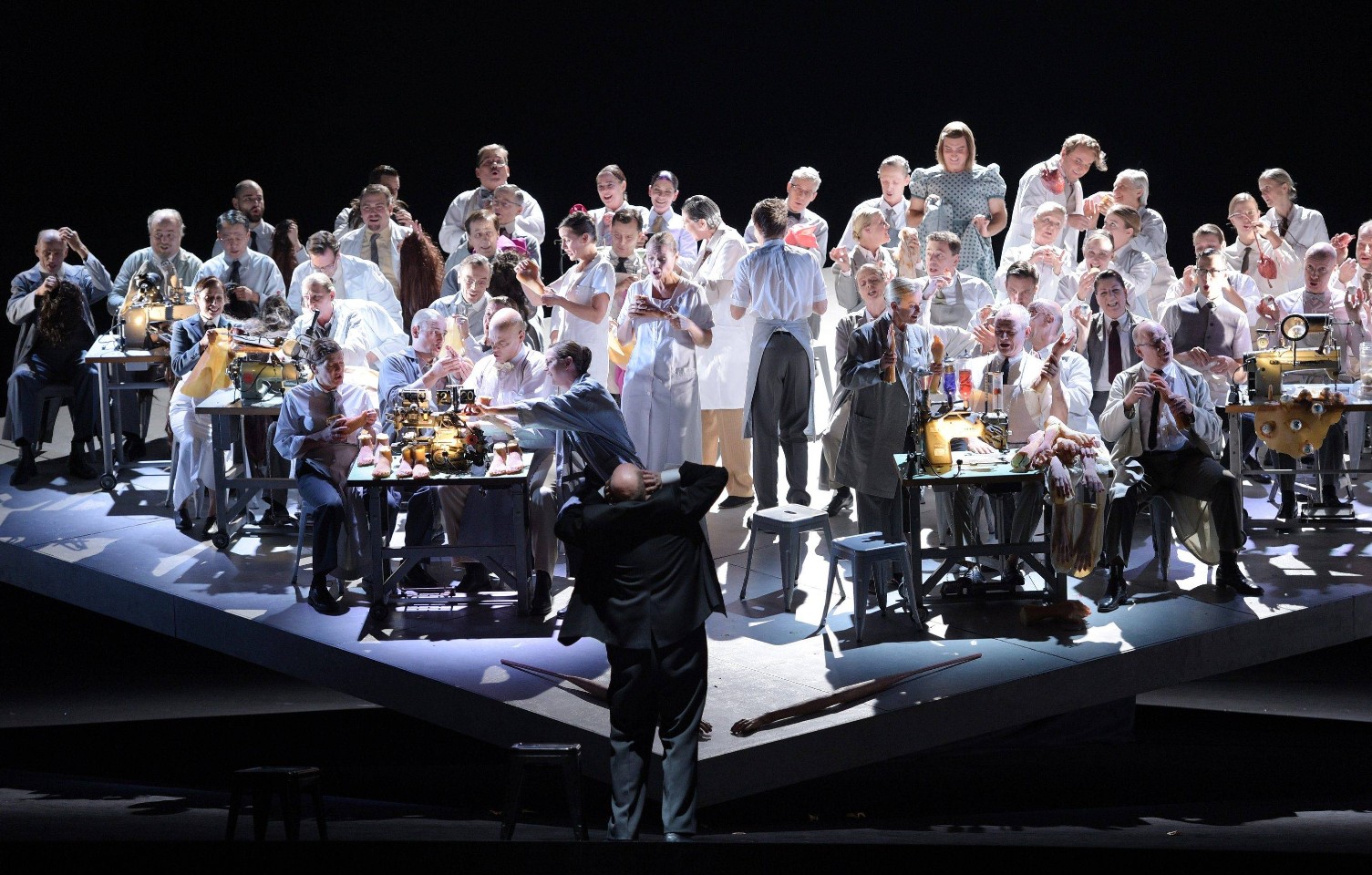
The chorus is the ever changing group of spectators reinforcing the madness of the scenes and watching Hoffmann as he walks near to the death trap each time. Kosky skilfully articulated the deform and ironic aspect in each scenes with the chorus portraying as drag queens, hardcore partygoers, killers of Antonia with violin bows and the evil masked crowd. The stage evolves from a sewing workplace to produce robots, then dancehall until the coffin is brought to put a nail in all madness at the Venice tale. In the opening scenes of first and second half the tone is already set for followings, as we see Hoffmann in the midst of drinking bottles and later playing the violin alone frantically, and combining with dim chilling stage lights. Dark humours receive a particular attention on the theme of each tales. Though one cannot not decide strongly whether to feel pity for Hoffmann misgivings, or he simply not deserve any sympathy because we are watching him as a cycle of madness instead of a trapped human being. As the audience we have a good laugh from the bizarre demonstration of Olympia with long limbs and facial expressions from the cupboard. Whereas the death scene of Antonia is emotional and tragic before we come to the final part to see how Hoffmann is punished and tricked. All these come to the conclusion that Hoffmann is a victim of his obsession.


Nicole Chevalier was outstanding in the role of Stella/Olympia/Antonia/Giulietta both as singer and actress, which I would want to hear more from her in future. Let alone doing all four roles by herself, rarely a singer could act so well, sing competently to meet all the technical challenge with the right timbre. Her rendition of the 'doll song' by Olympia had a lot of fun with exaggerated facial expressions, while nailing all the top notes accurately and not a sign of strain. She was also adaptable to the change of character by presenting a vulnerable Antonia in negotiation between passion and survival. There were also many moving musical moments as she sang the arias in part two beautifully. In terms of singers for Hoffmann, I preferred the baritone Dominik Köninger than the tenor Alexander Lewis. The former had a warmer and more beautiful timbre for the ears to enjoy, also smooth and natural in phrasing the lines. Uwe Schönbeck should be credited for his portrayal of Hoffmann as an old aged lunatic. He captured the mental anguish and deform physical expression vividly while maintaining the irony and humour at the same time. Alexandra Kadurina made a youthful and energetic muse but mixed results on the vocal side. I enjoyed her timbre with a darker colour, but her intonation and smoothness in singing were more secured in solo arias than duets and recitatives. Jens Larsen made the evil figure Linhorf alike a Mafia boss in outlook with good vocal projection but his voice was more a baritone than a bass. The chorus lived up to their reputation after being voted choir of the year by opernwelt. Not only they sang well with good intonation, vocal volume and good on the French diction, but also excellent in acting and dancing. The men particularly had a lot to do and wearing a dress did not stop to them to go wild in dancing or exaggerated gestures playing the violins, at the death of Antonia, while unleashing the sheer vocal impact. The chorus built such a climax in the cabaret scene towards the end of first half that no productions I known of could have captured the irony, craziness and excitements so successfully. The orchestra delivered many musical excitements and exquisite solo playing especially at the opening of part two. Daniel Huppert maintained a good musical direction and no hesitation to push the ensemble for climatic moments when necessary. As a whole, I would like to watch it again in future and another triumph from Komische Oper. 


Review - Tosca (Puccini), Staatsoper im Schiller Theatre Berlin, 13 October 2015


Tosca - Anja Kampe
Cavaradossi - Marcello Giordani
Scarpia - Michael Volle
Sacristan - Jan Martiník

Staatsopernchoir, Kinderchoir & Staatskapelle Berlin
Conductor - Domingo Hindoyan
Director - Alvis Hermanis

I rather reluctant to watch Tosca again because inevitably I would make comparison to the stupendous performance at Covent Garden back in 2011 with a starry cast, Jonas Kaufmann, Angela Gheorghiu and Bryn Terfel, conducted by the wonderful Antonio Pappano. It was a hard act to follow and this performance from the Staatsoper confirmed my worries.

For any first timer watching Tosca or for an opera experience, Hermanis production would sufficiently serving the purpose to tell the tale with a twist. Except the Te Deum scene, the stage visually divided into two levels: a colourful cartoon by Kristine Jurjane of the opera at the time of Napoleonic war was projected on the upper part, while we saw actions and singers dressed in the fashion of Puccini's time at the lower part. The concept itself was interesting but the dramaturgy did not make it attractive nor inspiring. The stage set had its limitation that actions confounded to the centre and the sides were for exits and entering only. Stage lightings were almost at the same level throughout the evening, and no blood spilled when Scarpia was stabbed by Tosca or Cavaradossi being tortured. The cartoon provided the locations of where different scenes took place in Rome but not really enhancing the visual impact or beauty. Not many furnitures were employed, even the paintings were shown in the cartoon, which made the set looked rather tame and empty. The Te Deum scene was the only part with a visual scene change that utilising the stage with a large chorus to form the procession, while Scarpia cursing from the last row of a church pew. Though the torture scene was an understatement as we saw Cavaradossi rather alive afterwards.


Thankfully Michael Volle and Anja Kampe acted well to save this dull staging from an ultimate boredom. The stabbing scene was intense and Michael Volle made a more terrifying Scarpia than Bryn Terfel. He captured the characteristics of Scarpia very well being a cunning torturer and crude womaniser but also bewildered by Tosca's motive. I also preferred his timbre with a fuller and darker tone that the singing resonated in the hall very well. Anja Kampe was better with actions than her singing. She had the right tessitura, but the timbre lacked the warmth and not being smooth with the phrasing. I felt she better stick with the German repertoire than Italian ones in terms of diction. Jan Martinik was specially mentioned because he was the most well sung Sacristan with a voice pleasant for the ears, phrasing was natural and being comfortable with the vocal range. Marcello Giordani replaced the indisposed Fabio Sartori as Cavaradossi. He certainly looked older than the part in compare to the one portrayed by the cartoon. Not a bad actor but I did not enjoy the switching of registers as he went up in the higher vocal range despite the intonation was secured. The sustaining of long notes sounded quite an effort and hard sometimes for the ears to enjoy. Domingo Hindoyan's conducting was serviceable to keep the ensembles more or less together but still negotiations over tempo in many corners. He would need more live experience to sharpen up the skills. As a whole, this was probably my least enjoyable musical evening in Berlin.


Review - Symphonies 1 & 3 (Beethoven), Philharmonie, 12 October 2015


Berliner Philharmoniker
Sir Simon Rattle

I never heard an interpretation of Beethoven third symphony with the same depth alike a Bruckner symphony until this performance by the Philharmoniker, but too much energy in the playing of first symphony for my taste. Last time I heard the Philharmoniker in live was 2010 at the BBC Proms. The Royal Albert Hall acoustic just about to the contain the sheer impact of sound, but this time even with finer acoustic in Philharmonie and a smaller force, one sometimes could feel the sound filled the hall so full that any more would lift the roof off. This was the case with Beethoven one that the instrumental attacks, especially strings, too much or even aggressive aiming for the rhythmic punch. I could understand the brisker tempo would shape the dance rhythmic patterns effectively and sound more interesting, but as a whole the band seems being a restless beast unleashing a lot of energy. Only in the second movement, Andante Cantabile, the calm returned between storms and more poetic playing to give a glimpse of beauty and elegance in the music. The musicians probably took the youthful nature seriously but it was still a work under the shadow of late symphonies by Mozart and Haydn. There could be dramatic moments but not yet with tempest and thunder.

Rattle never lingered on climatic moments or juicy tunes and focused more on transitions between passages. Some interesting results with the phrasing that in the first symphony one felt the musical direction was pushing too hard for the finishing line, in contrast, it worked very well for the structure and musical texture of the third symphony. The longer line of a phrase and expressive passages worked in advantage with the orchestra. The atmosphere changed in the second half that the playing allowed more space and interactions between sections were more intimate. The emotion in the funeral march movement was never over pour but the body of sound resonated in the hall with such level of depth, which one felt very moved as the symphony progressed from shadow to triumphant climax before returning to lament and sorrow. The produced colour captured the dramatic transitions very well that one would see and sense the inner emotion of the composer on the image of his 'hero'. A romantic outlook but still fresh and vivid. One could claim the composer had found his sound in the third but also to remember the first symphony was an accomplished work if with the right execution. As a whole, a memorable performance to remember.