Orphée - Papuna Tchuradze
Eurydice - Jodie Devos
L'Opinion publique - Alexise Yerna
Jupiter - Pierre Doyen
Pluton/Aristée - Thomas Morris
Cupidon - Natacha Kowalski
Vénus - Julie Bailly
Diane - Sarah Defrise
John Styx - Frédéric Longbois
Mercure - André Gass
Junon - Laura Balidemaj
Minerve - Alexia Saffery
Fortune - Yvette Wéris
Cérès - Sylviane Binamé
Pomone - Chantal Glaude
Flore - Palmina Grottola
Mars - Marc Tissons
Orchestra, chorus and dancers of Opéra Royal de Wallonie-Liège
Eurydice - Jodie Devos
L'Opinion publique - Alexise Yerna
Jupiter - Pierre Doyen
Pluton/Aristée - Thomas Morris
Cupidon - Natacha Kowalski
Vénus - Julie Bailly
Diane - Sarah Defrise
John Styx - Frédéric Longbois
Mercure - André Gass
Junon - Laura Balidemaj
Minerve - Alexia Saffery
Fortune - Yvette Wéris
Cérès - Sylviane Binamé
Pomone - Chantal Glaude
Flore - Palmina Grottola
Mars - Marc Tissons
Cyril Englebert (Conductor)
Claire Servais (Director)

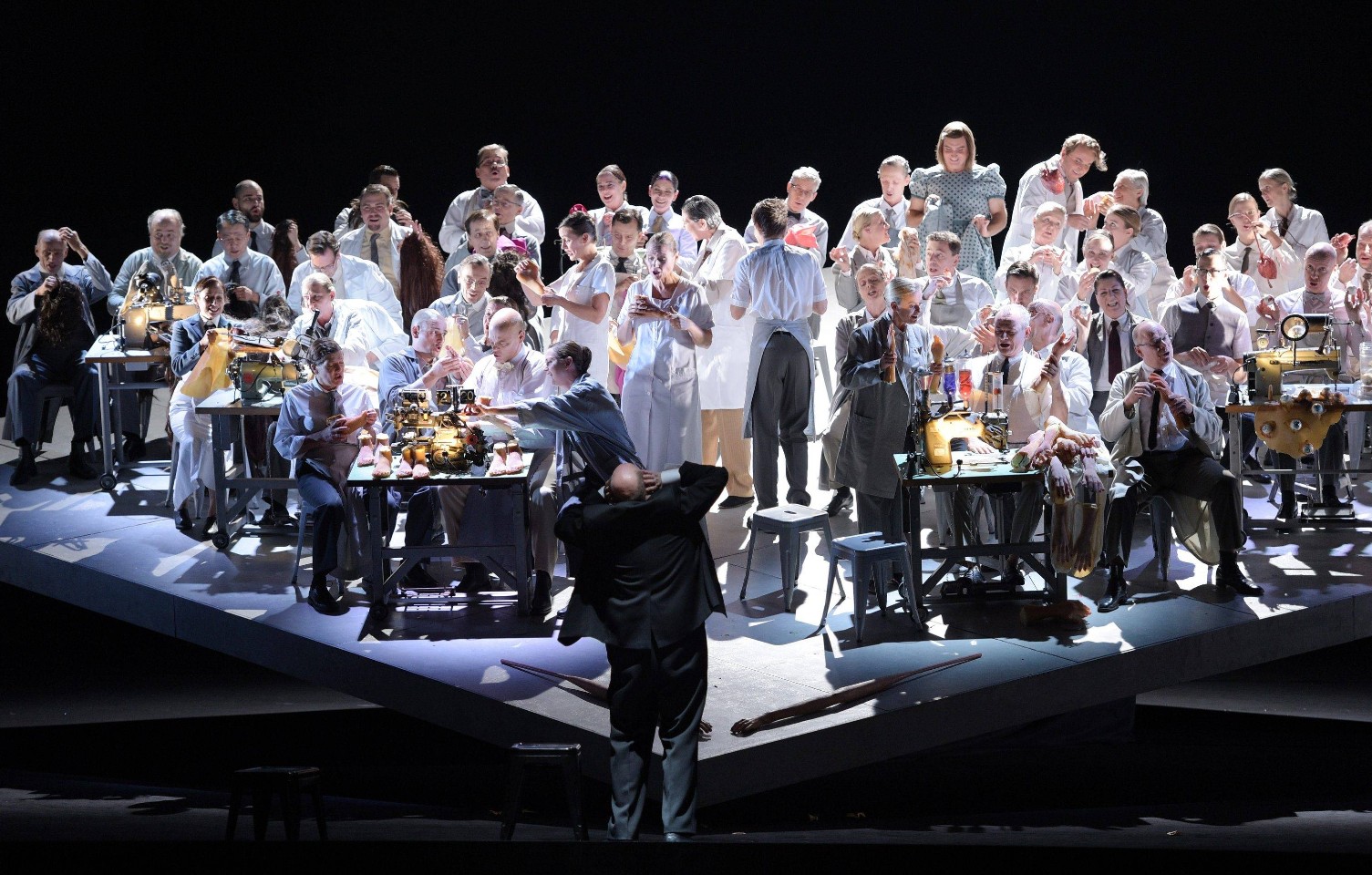
Offenbach's burlesque take on the tragic myth of Orpheus is arguably best remembered by the Infernal Galop of the second act. Instead of emotional sadness and sentiments encapsulated in Gluck's Orfeo ed Euridice, ironically the protagonists want separation in this comic take and as always gods' involvement complicate matters further. Musically though the operetta is not as extensive and sophisticated as The Tale of Hoffmann. Humorous and witty dialogues stand at the centre stage but without surtitles in English I struggled to follow. The revived staging of Servais received an update to retain its sparkling outlook. The underworld scene was the most elaborate and colourful in terms of staging with the full company. Singers and orchestra under the direction of Cyril Englebert delivered some quality musical moments, but I felt unnecessary to repeat the Infernal Galop so many times as encores.
A relatively small orchestra with less than 50 players to begin the evening with an overture, which was the longest instrumental part of the work. The band was responsive to Englebert's tempo changes with fine playing, but the brass was underwhelming by holding back in volume. Public opinion was an elderly woman and introduced the work with sarcastic remarks from a box alike a television host, while on stage Euridice was ironing in a laundry room. Devos possessed the flexibility in her singing with a rich voice and clarity in diction. Tchuradze as Orphée in compare was rather hard in tone and not pleasant for the ears. The solo violin playing rendered by the leader of the orchestra though was beautiful. Euridice was told off by the conductor when she threw the music into the orchestral pit. Pluto appeared in disguise as a beekeeper and drove a van carrying the Angelus by Jean-François Millet, whatever was the intention. Morris's timbre was distinctively bright, not a smooth voice and rather heavy on vibrato. A red light flashed when Euridice fell into the trap and Pluto's van transformed into a speed car. During the scene change, a group of children attempted to play violins but tuning was bad.

Orpheus reappeared with shopping bags in underwear only, and changed into a period outfit to resemble the classical outlook of a shepherd carrying a harp. He was then chased after by lions, tigers and rats before the scene changed into the assembly of Olympus. The gods were first asleep inside the ocean blue coloured room until a prolonged arguments broke out over their morality. Kowalski as Cupid and Doyen as Jupiter both had a pleasant voice with good bodied vocal volume. Exaggerated entrances when Mercure rode a bike on a string, and the hounds of Pluto were portrayed by men in leather outfits. Jupiter hided behind the speaker's stand when the company of gods decided to descend to the underworld and complained of his infidelity. Choral singing concluded the first half behind the stage curtain resembling the windows of an Olympus Airlines.
Male dancers in erotic outfits as the devil figures began the second half and saw Euridice resting on the couch of a backstage dressing room. Devos's coloratura was not smooth enough in ascending to the upper register even tuning was good. She covered her supervised guard, John Styx, with a leopard patterned sheet who wore a pink stripes underwear only and attempted to drink from her high heels. Kowalski, as Cupid, was more natural in her coloratura but insecure with tuning of the top notes. Flies duet between Pluto and Styx in the style of a fugue were hilarious and the scene ended in a chaotic catch. Later the underworld scene was flooded in orange colour with the whole company in exaggerated outfits. More athletic dance moments for the demons in contrast to the gods' static and convention routine. The conclusion was more a celebration of can can dance and not interest in the separation of Orfeo and Euridice. The protagonists simply moved on along with the festivity even how ridiculous their outlook were.

(Photo credit: Opéra royal de Wallonie-Liège)