Showing posts with label Berliner Philharmoniker. Show all posts

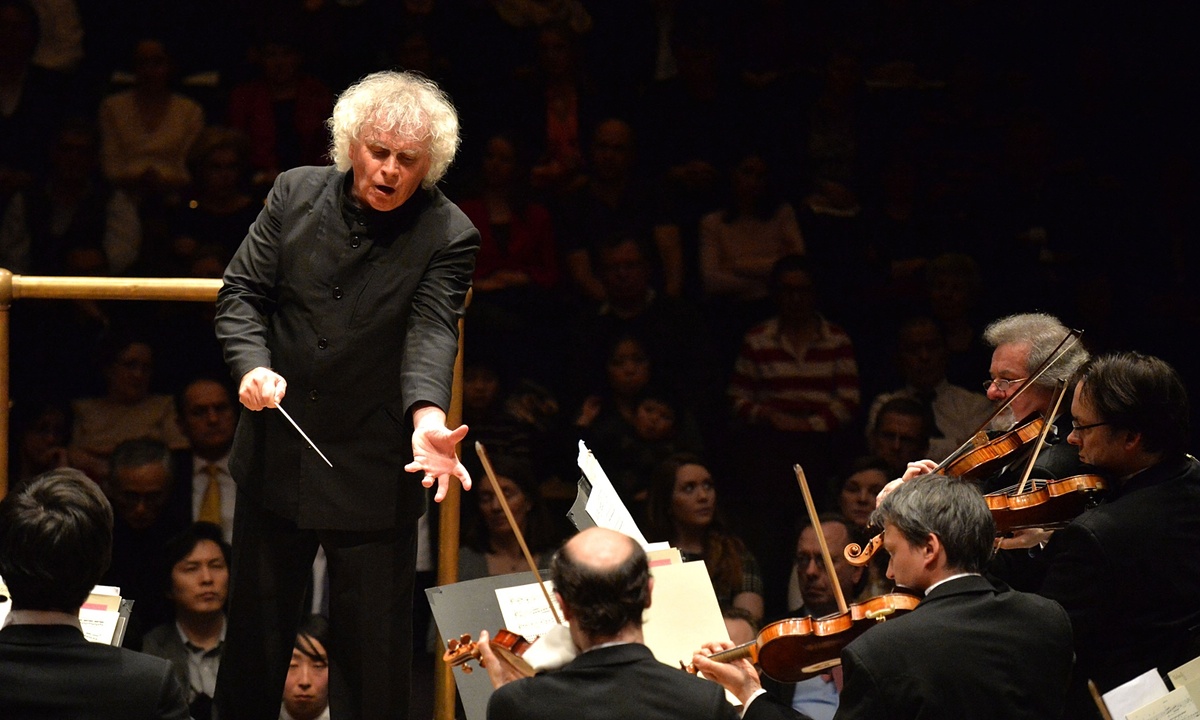
Review - Simon Rattle, Seong-Jin Cho & Berliner Philharmoniker, Hong Kong Cultural Centre, 10 November 2017

Don Juan (Richard Strauss)
Piano Concerto in G (Ravel)
Encore: Clair de lune (Debussy)
Symphony No. 4 (Brahms)

Seong-Jin Cho (piano)
Sir Simon Rattle (conductor)
Berliner Philharmoniker


The revisit of Berlin Philharmonic to Hong Kong marked the final Asian tour with Simon Rattle as its chief conductor, before Kirill Petrenko to assume the role in 2019. Besides local public screenings of both performances across the city, orchestra principals like Emmanuel Pahud and Amihai Grosz also gave their own recitals in town. Despite steep ticket price, with the top category charging nearly four hundred US dollars, the performance quality was as high as expected with many memorable moments. Over the two days a diverse programme was given ranging from Russian to Korean, though the first evening focused on the core German repertoire with Ravel's piano concerto sandwiched in between.

The full bodied sound, at the dramatic opening of the symphonic tone poem 'Don Juan', made a thrilling sonic impression. With such great energy, swift tempo continued at the following soft passage before rubato culminated the built up to a crushing climax. The intensity stayed throughout the gallop, but lacked some dynamic contrast at the mysterious flute leading interlude. The lyric like oboe solo was beautifully played while the strings sustained the soft and ethereal impression. The horns responded with a majestic and confident announcement of the main theme. During the thick and expressive transition, the orchestra managed not to create a vigorously violent tone. Rich tutti playing with sheer momentum drove the energy forward at the recapitulation of the highly romantic expressive theme. Though it could have been more patient with the tempo at the moody coda than too eager in reaching the end.

Probably due to where I sat behind the orchestra, the hall acoustic did not help to project the solo piano too well in the Ravel and sounded rather distant. Seong-Jin Cho's playing was rather stiff at first, in contrast to the energetic orchestral playing which was crisp and carried more direction. One felt the orchestra had a clear road map in mind and produced much colourful playing to the witty and jazzy passages. Elegant harp solo at first and Cho began to play with more momentum towards the end of the first movement . He finally sank into the performance when the lyrically expressive piano solo was given at the start of the second movement. His touch and dynamic achieved a fine balance with the vast space and carried the direction. Sublime winds' solo followed in their entrances and maintained a flowing impression that the tempo neither drag nor in hurry. The cor anglais played its solo beautifully and accompanied by the piano for a sweet and dreamy song without words.

Slick playing began the third movement with woodwind being smooth and secured in their jazzy passages. A rather playful piano part for Cho who maintained the lightness yet also the weight to keep the direction forward in the gallop. Excitement continued among the orchestral playing with transitions seamlessly woven together and accommodated the soloist with consideration on dynamics. For encore, Cho selected Clair de lune to continue the French theme and also a foretaste for his forthcoming album on piano works by Debussy. Not only he played elegantly, but also a good musical sense of phrasing the line naturally that never lose the intention. Even at the elaborated development that his playing was not aggressive and the smoothness sustained throughout. His exquisite touch on the tranquil music held me spellbound and deserved a second hearing in future.


Despite I generally had difficulty to appreciate Brahms's symphonic work generally, the high music standard that being set at the first half kept me interested in what to follow after the intermission. The fourth symphony itself was one that I struggled to understand. Like Tchaikovsky's sixth symphony, the composer would have a rather cheerful third movement but followed by a rather gloomy ending for the sake of seriousness. The first movement was also enigmatic and far from having a clear expression. Instead, the performance gave a rather different approach to the symphony than what I expected. It convinced me that the composer could have been less restrain on his emotions after all. Yet the orchestra took some time to settle at first by being uncertain and untidy in the syncopated entries. There was a level of eagerness to hurry the tempo along, while the strings were heavy footed with the pizzicatos and vibrato heavy. Structurally dialogues between strings and winds did not synchronise naturally and lacked the seamless connection that was effectively executed early on. Momentum gradually regained when reaching the lengthy echo of suspended main theme between parts. The lush tutti sound poured out the emotional tragic sentiments in full and crushingly violent at the coda.

In contrast, the second movement began with the winds playing a broad and majestic dance motive. Sectional entries were seamlessly woven together and stayed on the same dynamic level throughout. The strings entered confidently and expressive on emotions, which carried the sonic intensity but not explosive. It gradually built up the sentimental climax into a rich and vast sound world. The sonic depth gloriously rang out in the hall before calmness hold the emotions back once again. The overall approach to the third movement focused on romanticism than the celebratory mode. Sunshine and positivism broke through the cloudy closing of the previous movement, yet the playing remained majestic and lush than hastening through. Entries were closely connected, and the music was phrased into one long breath so that the intensity was kept throughout.

These all left room for a natural development when the tragic bleakness returned at the beginning of the last movement. Heavy vibrato on strings might not be the current fashionable performing style, but it had expressed the emotions effectively in full at this point. Yet the orchestra did not indulge with the sentiments but kept the momentum forward. Exquisite flute solo on the sorrowful theme answered by some hopeful glimpse from the brass. Violent respond on the strings instead, and was breathtaking to hear the crescendo being built in seven steps as one progressively more intense than before. Ebbs and flows of emotional tides in contrasting dynamic aimed for a tense coda, which culminated the wall of sound into a rich sonic ocean with depth. It took the breath away and worth even the expensive cost to hear this great orchestra on another musical inspirational high point.


(Photo credits: Berliner Philharmoniker; Cultural Presentations Section of Hong Kong)

Review - Symphonies 1 & 3 (Beethoven), Philharmonie, 12 October 2015


Berliner Philharmoniker
Sir Simon Rattle

I never heard an interpretation of Beethoven third symphony with the same depth alike a Bruckner symphony until this performance by the Philharmoniker, but too much energy in the playing of first symphony for my taste. Last time I heard the Philharmoniker in live was 2010 at the BBC Proms. The Royal Albert Hall acoustic just about to the contain the sheer impact of sound, but this time even with finer acoustic in Philharmonie and a smaller force, one sometimes could feel the sound filled the hall so full that any more would lift the roof off. This was the case with Beethoven one that the instrumental attacks, especially strings, too much or even aggressive aiming for the rhythmic punch. I could understand the brisker tempo would shape the dance rhythmic patterns effectively and sound more interesting, but as a whole the band seems being a restless beast unleashing a lot of energy. Only in the second movement, Andante Cantabile, the calm returned between storms and more poetic playing to give a glimpse of beauty and elegance in the music. The musicians probably took the youthful nature seriously but it was still a work under the shadow of late symphonies by Mozart and Haydn. There could be dramatic moments but not yet with tempest and thunder.

Rattle never lingered on climatic moments or juicy tunes and focused more on transitions between passages. Some interesting results with the phrasing that in the first symphony one felt the musical direction was pushing too hard for the finishing line, in contrast, it worked very well for the structure and musical texture of the third symphony. The longer line of a phrase and expressive passages worked in advantage with the orchestra. The atmosphere changed in the second half that the playing allowed more space and interactions between sections were more intimate. The emotion in the funeral march movement was never over pour but the body of sound resonated in the hall with such level of depth, which one felt very moved as the symphony progressed from shadow to triumphant climax before returning to lament and sorrow. The produced colour captured the dramatic transitions very well that one would see and sense the inner emotion of the composer on the image of his 'hero'. A romantic outlook but still fresh and vivid. One could claim the composer had found his sound in the third but also to remember the first symphony was an accomplished work if with the right execution. As a whole, a memorable performance to remember.