Showing posts with label Beethoven. Show all posts

Review - Orchestre de Paris, Philharmonie de Paris, 27 September 2018 & 4 October 2018

27 September 2018

The Coriolan Overture (Beethoven)
Violin Concerto No. 2 (Widmann)
Symphony No. 6 (Beethoven)

Carolin Widmann (violin)
Daniel Harding (conductor)

4 October 2018

Overture to 'Beatrice and Benedict' (Berlioz)
Piano Concerto No. 2 (Prokofiev)
Symphony No. 7 (Beethoven)

Igor Levit (piano)
Thomas Hengelbrock (conductor)


I never learn from the past and still attended the concert under jet lag. A strong coffee would have been useful to stay awake than dosing off. Nevertheless, the first concert experience at Paris Philharmonie was not that satisfying and there were some noticeable hiccups. The orchestra gave an explosive start in Beethoven's Coriolan overture. It carried the intensity to drive the tension in full until descend to a quiet end.

Widman's second violin concerto began with a minimalist gesture by using 'cor legno', which used the back of the bow hitting the strings. Short random notes made further abstract impression and then disrupted by a violent crescendo from the lower strings.

Harmonics were employed to start the second movement mysteriously in a surreal timeless landscape. A more lyrical line for the violin to indulge on lush romantic themes but the orchestral accompaniment was atonal on the other hand. It carried more emotional towards the end of the movement in a bright and raw tone.

An energetic charge kicked off the last movement with a busy part for the solo violin. It quoted the beginning of the concerto briefly before bursting in hurry again. The nervousness and violence built towards a bizarre and explosive coda like a boiling kettle.

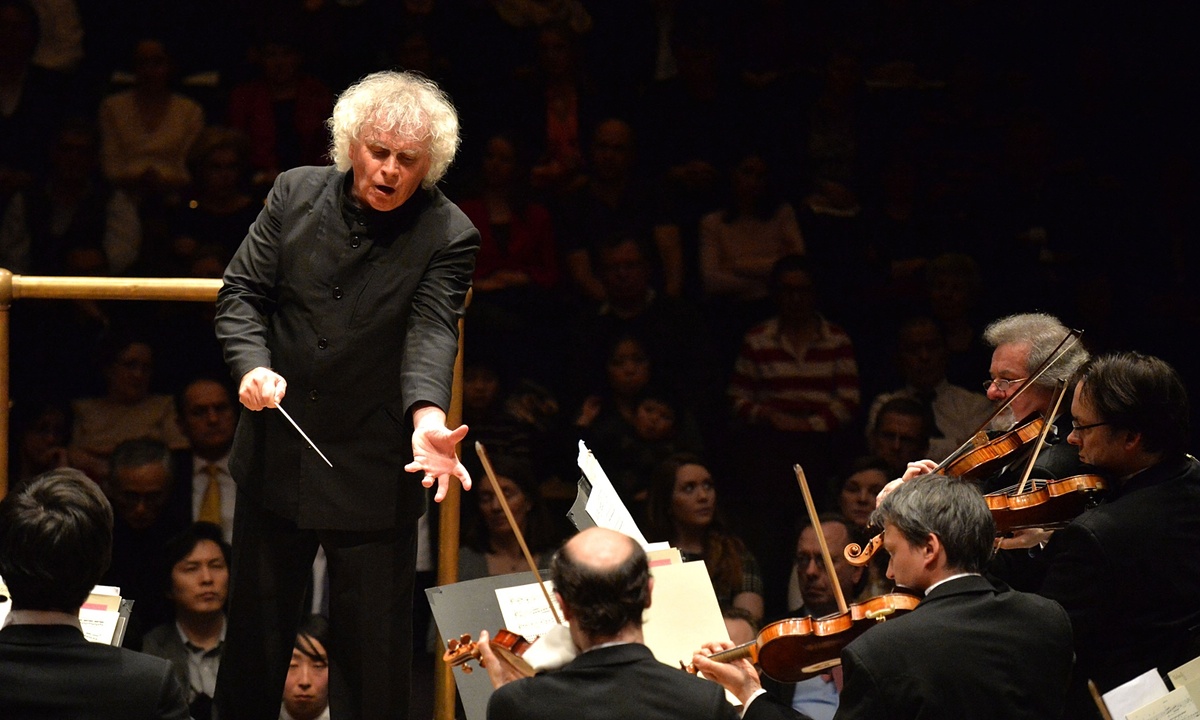
In the Beethoven's sixth symphony, Daniel Harding's big gesture conducting style seems to be in opposite of the orchestra's playing being elegant and fluid. He made noticeable groans that one felt rather disturbing for the audio appreciation. The arpeggios were kept light and displayed the colourful scoring effectively of a cheerful pastoral scene in the first movement. The second began tenderly with the strings playing with mute on. It created a raindrop impression while keeping the music flowing softly. The wind solos were sweet in tone and able to show the dynamic contrast. Though the dialogue between the flute and clarinet went rather wrong that it took some bars to rectify and get back together.

The gallop before the storm was better coordinated that sustained the rhythmic forwardness. It reached sheer intensity at the stormy passage which was dramatically rendered and again displayed the contrast in colours and dynamics. A rather swift tempo was adopted for the aftermath fifth movement, which Harding probably preferred as a light quick dance. It certainly kept the momentum flowing and very bright colour from the brass. The coda was regal and stately concluded.

Hengelbrock's conducting was different from Harding by being less expressive and controlling. Yet there was some uncertain moments in Berlioz's overture that he let the orchestra to lead the direction. The playing at first lacked the swing of a dance but the strings played the lyrical theme beautifully. Bright tone during the gallop and the tutti playing gained more forward momentum. It finished energetically with sheer excitements.

Structurally Prokofiev's second piano concerto was more upheaval and stormy than the third piano concerto. A dreamy start to the first movement by the solo piano negotiating between ebbs and flows of subtle emotions. The virtuosic passage was a flamboyant dance attempted to break the mysterious atmosphere before retreating again. The quietness created a blurry coastal scene afar that echoed the calm beginning. It was disrupted by the orchestra thundering entry. In contrast to the tender touch before, Levit added more weight and intensity to build up the crescendo throughout the symphonic like solo passage.

The second movement was more straightforward for the audio appreciation with the music galloping in haste and rhythmically energetic. Like many other works by Prokofiev, the dotted rhythm dance gave a more muscular and weighty impression to the third movement. It was like a drunken Russian dance that swung bizarrely to a violent climax, yet not grotesque or sarcastic. The coda was surreal and dreamy again with soft chords on the solo piano. Levit sustained the curiosity with delicate touch and clarity in his playing.

A dramatic beginning to the last movement alike a beast storming in and showing emotions in full. It was answered by a quiet passage that recalling an old Russian folk tune in tenderness, which Levit kept the legato sustained for a long line. Though the violent presto did not leave much room to indulge on emotions, instead sheer wildness and madness marked the conclusion.

The hall acoustic enhanced the textural clarity and dynamic contrast in one of the all time favourites, Beethoven's seventh symphony. A subtle opening followed by a majestic and robust gallop to the first movement. Dramatically it was exciting and rhythmically energetic. Hengelbrock employed a rather swift tempo for the second movement and shaped the music like a dance. Rhythmically active and carried less musical sentiments. The winds' solo lines flowed into one another seamlessly and effective in dynamic contrast.

Energetic gallop opened the third movement that sustained the forward momentum and kept the music flowing. Even at quick tempo, the dynamic difference was observed and not losing the activeness in sound. The brass played the fanfare in bright tone and triumphantly. It continued into the flamboyant dance of the fourth movement with no gap. Tempo was on the swift side that carried a lot of energy into the gallop. It built up to an explosive climax at the conclusion and the strings enjoyed the dialogue among parts, which without surprise earned an enthusiastic reception from the audience.

(Photo credit: Orchestre de Paris)

Review - Geneva Camerata & Viktoria Mullova, The University of Hong Kong, 14 June 2018

Fireworks (Debussy, arr. Keren)
Violin Concerto in e minor (Mendelssohn)
Variations on themes from Porgy and Bess (Gershwin, arr. Keren)
Symphony No. 8 (Beethoven)

Geneva Camerata
Viktoria Mullova (violin)
David Greilsammer (conductor)


Despite energetic playing and displays of chamber virtuosity marked the debut of Geneva Camerata in Hong Kong, there was a noticeable balance problem between strings and winds. The tone colour of middle and lower part were rich, but the upper felt relatively thin on top. More upper strings would be desirable in the Debussy to be more able bringing out the theme and counter the weight. It was better in the Beethoven with the full team of violins, yet a silky tone would be more effective to penetrate the thick texture than a raw sound. The employment of period horns and trumpets certainly helped with the balance, yet rest of the woodwind remained in modern gears was sometimes overpowering for the current formation.

Greilsammer also preferred to keep the tempo on the swift side, which kept the momentum flowing with rhythmical excitement. He gave some interesting insight in the fashion of the current period informed practice. His approach of the Mendelssohn as a dance marked an opposite to the romantic indulgence one normally encountered. It certainly created a brighter tone colour and shape to the longer phrase. The dotted rhythm in the first movement of the Beethoven was exaggeratedly rendered, which felt more fiery and urgent. Same with the accented notes in the third movement that turned into a flamboyant dance and rhythmically bouncing. Instead the last movement of the symphony became an exuberant hunting gallop with the winds turning into a lively military band. He probably saw the work as a drama and reminiscence of the Napoleonic war than an Indian summer preceding the ninth.

Yet under such robust forwardness, it did not leave much room for the built up of intensity towards climax. In Debussy, the culmination of tension fell short from the sedate slow march preceding the ebbs and flows of waves alike in La Mer. The tempest in Beethoven’s first movement also lacked the impact but roaring through. Although some minor tuning glitches, Viktoria Mullova delivered the technical expectations and very natural in her playing. If one has to be fussy, perhaps less weight on the slides between positions, but nonetheless that would allow the swifts easier to nail the right notes. Jonathan Keren’s arrangements of the Debussy were more colourful and interesting than the Gershwin, which the latter seems lacked some memorable features than a medley of excerpts.

Review - Piano Recitals by Daniil Trifonov and Rafał Blechacz, 26 September 2017 & 12 October 2017

26 Septebmer 2017, Hong Kong Cultural Centre Concert Hall:
Variations on a Theme of Chopin (Mompou)
'Chopin' from Carnaval, Op. 9 (Schumann)
Studie 'Hommage à Chopin' from Stimmungen, Op. 73 (Grieg)
Nocturne, Op. 33 (Barber)
Un poco di Chopin from 18 Pieces, Op. 72 (Tchaikovsky)
Variations on a Theme of Chopin, Op. 22 (Rachmaninov)
Variations on theme from Mozart's Don Giovanni, Op. 2 (Chopin)
Sonata No. 2 in b-flat minor, Op. 35 (Chopin)
Encore: Fantasy-Impromptu in C-Sharp Minor, Op. 66 (Chopin)
Largo from Cello Sonata (Chopin, arr. Cortot)

Daniil Trifonov (piano)

12 October 2017, Hong Kong City Hall Concert Hall:
4 Duettos, BWV 802-805 (Bach)
Rondon in G, Op. 51, No. 2 (Beethoven)
Sonata No. 3 in C, Op. 2, No. 3 (Beethoven)
Fantaisie, Op. 49 (Chopin)
Nocturne in f-sharp minor, No. 48, No. 2 (Chopin)
Sonata No. 2 in b-flat minor, Op. 35 (Chopin)
Encore: Intermezzo in A, Op. 118, No. 2 (Brahms)

Rafał Blechacz (piano)

Less than a month after Daniil Trifonov's Chopin themed recital, Chopin's works again filled the second half of Rafał Blechacz's programme. Both had the second piano sonata as the concluding item, yet the two approached differently. One felt Trifonov was rather expressive and romantically driven, whereas intimacy and inner emotions marked in Blechacz's playing.

When Blechacz played the short prelude in A major as his final encore, it reminded us of Mompou's theme and variations that Trifonov began his recital. Despite the vast acoustic of cultural centre concert hall, one enjoyed the soft and sedate opening. It led to a lyrical passage marked by contrasting dynamics before resolving to the dreamy state again. The dotted passage felt pondering than carrying a direction though, and became rather cloudy in the tender and tuneful theme. At reaching the expressive and passionate climax, Rachmaninov seems more in mind by the harmonic colours and rhythmic patterns. Trifonov restrained from keyboard bombardment in the fantasia like gallop but instead gave a rather feminine touch to it. The four short pieces by Schumann, Grieg, Barber and Tchaikovsky as hommage to Chopin was an interesting selection. Grieg's approach reminded me of Rachmaninov than Chopin by the expressive arpeggios, whereas Barber harmonically was rather modern looking with the mysterious outlook that gone very distanced from Chopin. Tchaikovsky though lacked a definite outlook but only soft and tuneful.

Despite Rachmaninov referenced the funeral march from the third movement of Chopin's second sonata in his theme and variations, his idea went beyond the original with a rather symphonic sound world in mind. Trifonov kept the slow march flowing than indulging on the tragic sentiments. A mysterious and sorrow start to the fugue,which then developed into a lively and complex progression. Spread chords were expressively played and not aggressively hammer. A brief romantically driven passage followed by a crushing and wild gallop. Contrasting dynamics created immense emotional contrast and later it developed into another mysterious and unsettling transition. Then it galloped into a broad and muscular sound world with sheer intensity, in contrast to the fantasia like development that later lightened up by a lyrical theme. A triumphant and exuberant climax was given yet Trifonov rightly so to play the return of funeral march as devastating and bold than before.

The second half though lacked the brilliancy and lost focus. Variations on the theme from Mozart's Don Giovanni recalled those technical showcase piece by Liszt, but it did not feel right for Trifonov. His playing became untidy and phrasing seems random. Gallops were sometimes out of shape and sounded blurry by being sticky on the pedal. Later he was impatient in the first movement of the second sonata by hurrying through. It felt like a tense pressing after a lyrical resolve but never reach. Employing the same approach became dull for the ears and lacked contrast in colours. Questionable phrasing again in the second movement that did not carry the dance momentum but only as a rhythmic exercise. Nevertheless, he regained the calm and submissive touch in the tender interlude that at times was spellbinding and effective. Cloudy tone resurfaced at recapitulation even it was energetically driven. The funeral march of the third movement recalled the Russian context alike Rachmaninov early on. Trifonov seems more at home in building up the majestic crescendo in contrast to the still and lullaby like passage, which the softness magically stayed on the same level without losing the intention. As the funeral march returned, the emotions culminated again for the sheer devastation. Twice I listened to the short and chromatic styled fourth movement, one still could not understand by its purpose. Perhaps I was tired by then or Trifonov employed too much rubato without a clear intention, neither the Fantasy-Impromptu or arrangement of the cello sonata interested me anymore.

The acoustic of City hall concert hall is more ideal for solo instrumental recital with a warmer sound, and more in proportion by the smaller performing space than the cultural centre. It elevated Blechacz's smooth and delicate playing into a beautiful tone throughout. He began the Bach tidily and aimed for the counterpoint in the first movement. Each thematic entry at the fugue of second movement was introduced clearly and structurally transparent. The good work continued into the third movement and kept the momentum flowing. His ornamentation sank naturally into the tricky rhythmic patterns of the fourth movement with the dynamic differentiation that created a colourful sound world. However, I did not enjoy his interpretation of Beethoven's Rondo in G as much as the other works. It felt he was hurrying along and rather mechanical in approach, which pushed the tempo too quickly than letting the music to sing. The attacks were rather sudden and shapeless by his playing being impatient.

In turn, he had shown more thoughts and interest for Beethoven's third piano sonata. A muscular flourish opened the piece and the progression flowed tightly that had the intention to move forward. Though he could have been more relax in the soft passage by being more tender than tense It would have allowed more dynamic contrast from the dense and bold interlude followed. Composition wise it seems Beethoven wanted to experiment new harmonic language and those thoughts were given a quick glimpse. Blechacz maintained the smoothness and clarity as the music descended to the lowest range before repeating the opening theme. The second movement was romantically driven at first but at the end the classical style returned, which was more optimistic than the tragic sentiment in first place. Spellbinding tenderness during the quiet and soft passage that sustained the textual silkiness. Scherzo of the third movement was probably the most experimental of the whole work. Harmonically complex and structurally dense but leaving an open end without a clear resolve. Blechacz kept the rhythmic excitement by aiming at the spring board to the next phrase that began the fourth movement. The heavily scaled passage carried the sheer intensity with forward momentum and again Beethoven experimented ideas before a conventional closing.

Chopin's Fantaisie began rather mysteriously and moody. It was rather inward looking before a climatic built up from the soft and lyrical theme into a vigorous dance. Blechacz's left hand was sometimes heavier than the right but still able to maintain the clarity. He preferred a tidy and unhurried playing in the flourish than a technical run off with bold gesture. Nocturne in f sharp minor is a more typical Chopin piece with the subtlety and calmness more familiar with. Tenderness and the intimate sentiment were sustained throughout that a grand overview.

Compare to Trifonov's interpretation, Blechacz approached the first movement of the second piano sonata with a more sustained and legato playing. Even the expressive gallop stayed subtle which lightened the emotional flourish. Yet the progression stayed tightly and maintained the direction. Structural clarity was achieved even at romantically driven passage than over expressing. This time the second movement still had the virtuosic impression but managed to carry in a rich tone. It was gentler and more sedate through articulating the contrast between intimacy and rhythmic excitement. Funeral march of the third march was also given a lighter touch and flowed in boldness. Dynamic contrast was more faithfully observed to avoid being dense and over sentimental. The lyrical theme was highly moving by the sensitive touch with lightness, before the funeral march reappeared majestically. Intermezzo in A by Brahms put the smile back on the face and ended this performance on a satisfying high point. 

Review - Lucerne Festival Orchestra 2017 Asian Tour, Tokyo Suntory Hall, 6 & 7 October 2017

6 October 2017:
'Egmont' Overture (Beethoven)
Symphony No. 8 (Beethoven)
The Rite of Spring (Stravinsky)
Infernal dance from Firebird (Stravinsky)

7 October 2017:
Also sprach Zarathustra (Richard Strauss)
Tod und Verklärung (Richard Strauss)
Till Eulenspiegels lustige Streiche (Richard Strauss)
Dance of the seven veils from Salome (Richard Strauss)

Lucerne Festival Orchestra
Riccardo Chailly (Conductor)


This Asian tour was an overdue revisit for the orchestra since Abbado's death and the change of leadership to Riccardo Chailly. The two pairing programmes showcase how versatile this orchestra is, which the members are top notch musicians from various leading European orchestras. Though the two performances were not a total success and Chailly hold some responsibility for the shortfall of insight in his conducting. Beethoven's Egmont overture provided a foretaste of the full bodied rich tone colour from the orchestra. It made a confident start with some tidy and polished strings' playing. Legato was sustained through the line for a flowing impression. Despite first half of the work was in minor key, the produced colour was bold and rich rather than sentimental by impression. However, the thick strings' body affected the balance and the trumpets were drowned by them. Another issue was the lack of focus in phrasing that the Allegro passage was rushed through than shaping the music to build up a climatic finale.

The lack of phrasing continued into the first movement of Beethoven's eighth symphony, which the majestic gallop did not have enough edge for the rhythmic drive. There were also too many desks of strings that tutti playing not being tidy and dense in colour. The tempestuous crescendo felt alike a noise bombardment but lacked colour and dynamic contrast. In turn, the orchestra carried more shape in the playful second movement. Though it again hurried along the minuet of the third movement, and felt like a heavy dance than with the lightness in mind. Blazing sound from the horns' graceful playing but not too exciting to hear for long. It eventually found its foot in the fourth movement which marked with Allegro Vivace. Tempo maintained at the right momentum and restrained from galloping towards the coda. It also had a sweeter and more optimistic outlook. However, the full and rich playing did not feel crispy and details again lost to the heavy handed rendition. Chailly's conducting did not either suggest he had in mind how to shape the music more effectively but simply hurrying along.

A sedate bassoon solo began the surreal sound world of the Rite of Spring in the second half. Though the adopted tempo was too broad and did not carry the flowing momentum. As it reached the tribal dance passage, instrumental cries had the wildness and excitement in place. Yet soon the slow march dragged too much and lost sense of direction again. Later the playing regained some forwardness at the climax, followed by a calm and flowing solo clarinet passage in the transitional section. Structurally clear even during the thick and complex passages. The explosive infinite coda of part one carried sheer excitement of wildness. However, tempo was too broad again in the eerie introduction to the second part. Transitional passages were cloudy in connections and lost direction at the softest moment of the whole work. It felt like sitting on the music than carrying the forward momentum. Radiant horns' entry before returning to the exuberant dance climax and followed by a majestic march. The orchestra had more direction finally towards the end as the music went evermore brilliant. Screaming winds against the exuberant strings' playing created the sheer dramatic excitement. Infernal dance from Stravinsky's Firebird, which had a film score composition style, was given as the first encore. The orchestra played tenderly in the lyrical opening and later gradually went wild for an explosive end.


The second performance predominantly featured tone poems by Richard Strauss, which filled the gap between early romantic period and twentieth century of the first programme. The sunrise scene of Also sprach Zarathustra was glorious rendered with a wall of sound from the orchestra and the Suntory Hall's pipe organ in full blast. Strings' front desks then gave a legato and warm playing for the lyrical depiction of the mountain when it was revealed. Tutti strings built up from there for a sweet, expressive and lush melodic theme. Though Chailly still phrased the music vertically than driving the momentum forward. A muscular and thick bodied sound was made at the crescendo of the storm passage, but the playing did not carry the intention. Lower strings played aimlessly than painting the music, while the woodwinds far from creating the humorous impression at the transitional interlude. Instead, blazing brass took the attention in another stormy passage with a crushing wall of sound. Solo winds were able to sustain the connection in the challenging dialogue passage, but rather messy when the solo violin responded with a folk dance passage. Phrasing and structural clarity improved as the orchestra reached the energetic waltz like passage. Strings played beautifully and knew how to flow between the ebb and flow of emotions naturally. The triumphant theme was gloriously rendered and the orchestra built towards another climax until the bell tolled. Delicate playing from the upper strings and woodwinds for a spellbinding heavenward conclusion.

'Tod und Verklärung' is another typical Strauss's work that searching endlessly for climatic resolves. The orchestra played in a silky tone throughout and displayed the best tone quality it could produce. A flowing impression began the mysterious and sorrow opening. Strings and winds introduced the themes alternatively yet the tone colour was dreamy. It was followed by a violent passage that filled with sentiments and emotions. Resolve to the sweet and lyrical state was beautifully rendered particularly on the melodic theme led by the flute. The dream like soft theme recalled those alike later in Die Frau Ohne Schatten. A muscular and triumphant theme was repeatedly given against the return of the tragic motive. It reached another climax for an optimistic resolve, but the tragic devastation struck again and led to a zen like meditation. Finally a radiant hymn like theme was given at the coda and emotions poured out in full to finish on a romantic high point.

'Till Eulenspiegels lustige Streiche' in turn had more dramatic contrast compare to 'Tod und Verklärung'. Strings effectively conjured the witty impression and galloped in great momentum. Lower strings then playing with a full rich tone on the waltz theme. The ever evolving rhythmic patterns did not pose a challenge and the orchestra had in mind how to shape the music meaningfully. It could also play wildly to create a crushing impact then returned to the naive like response. Blazing tone colour sustained throughout the brilliant heroic gallop for sheer dramatic intensity. Rhythmic momentum and dynamic changes also created a lot of musical excitements. Winds' piercing cries responded by brass solemn theme made a devastating impact on the tragic development. Yet the thrill at the coda was brilliantly executed with an exuberant crescendo. Dance of the seven veils from Salome gave a colourful middle eastern flair for a fitting conclusion to the orchestra's Tokyo visit.


(Photo credit: Geoffroy Schied and Instagram)

Review - Anne-Sophie Mutter, Daniel Barenboim and Staatskapelle Berlin, Philharmonie, Festtage 2017

Nostalghia (Takemitsu)
Violin Concerto (Beethoven)
La Mer (Debussy)
Three pieces for orchestra (Berg)

Anne-Sophie Mutter (Violin)
Staatskapelle Berlin
Daniel Barenboim (Conductor)

A rather ambitious programme, which displayed vast music colours and styles, began this year count down to the Easter weekend by the Staatskapelle Berlin. It began with Nostalghia, a twelve minutes work for solo violin and orchestra, as a minimalist reflection of the poetic film in the same title by Andrei Tarkovskij. Instead a reference to the plot and character, Takemitsu, also a cineast, was more interested by the form, movement and sound of water in the film. A slow and mysterious but moody opening was given with long notes hanging in the air. Scalic climb in diminished seventh reached the higher sonic range with harmonics. Glissando on strings evoked an eerie impression and double stops appeared randomly on the solo violin part. The slow tempo suspended the air in stillness reached a brief injection of emotions but faded again. A sudden violent outburst led to the cadenza passage for solo violin with a lot of vibrato at the climb to upper positions. Double stops were then replaced by harmonics and raw sound on the strings. Solo cello played a tense and expressive theme, before returning to the mysterious sound landscape with long notes on strings towards the coda.

In contrast to Takemitsu's dreamy and surreal sound landscape, the violin concerto by Beethoven was muscular, reassuring and bold. Though the employed tempo and phrasing made a sluggish performance despite the produced tone was polished and beautiful throughout. The orchestral introduction was rather full bodied and grand, but also rather vertical looking. Barenboim left the orchestra to phrase the music and only indicated entries than showing direction. A smooth and unhurried entry from Mutter though intonation was far from accurate on higher positions. Compare to Takemitsu, her playing carried more shape because of familiarity since playing the Beethoven's concerto for many years. Though she and Barenboim continued to be sluggish, which the playing began to feel unnecessarily slow and lacked momentum. A rather broad tempo at the cadenza with much rubato, and also heavy on vibrato and bow weight. Tuning also went flat in the technical demanding closing of the first movement.

Strings' lyrical opening of the second movement was tender but again too steady for my taste. Mutter consistently gave a sweet and clean playing but the slowness dragged the orchestral accompaniment along. One felt bored by the effect despite she achieved the intimacy with the softness in dynamics. The dramatic transition was rather abrupt by development and pouring more emotions at the passionate transition when reaching the last movement. Mutter finally loosen herself, which she gave a virtuosic technical display and more able to deliver the ebb and flow of emotions. The orchestral gallop was energetically corresponded by the beautiful tone quality. It was neither hurry over the double stops and gave sufficient time for each note to sing. An exquisite sweet and tender cadenza, which again Mutter's playing was seamlessly smooth in switching positions preceded the brilliant finale with urgency. Even so, I was not too thrill by the playing as a whole due to many questionable rubato employment and lacked the forwardness.

Interestingly the orchestra had more shape in its playing and regained the interest in their music making at the second half. The mysterious and eerie opening of Debussy's La Mer was followed by an ongoing of ebb and flow of emotions and dynamic contrasts. Though one still sensed the orchestra was observing than driving the momentum, and Barenboim seems rather cool on phrasing by only indicating entries. Yet the sunrise scene was beautifully played with a radiant tone colour followed by a romantic and rhythmically ever changing second movement. The playing was more connected and flowing than before, but it stayed within the vertical shape than moving forward. There was more momentum throughout the tempestuous third movement that depicting the wind and sea, compare to the calm and sunny state in previous movements. Strings gave a strong pulse in building up the violent gallop and answered by a magnificent brass fanfare. It was crisp and precise to sustain the dramatic outlook for an explosive finale.

Berg's music style instead took away the impressionist outlook and replaced with a disfigured appearance. The prelude had a level of weirdness in its development and unsettling as where it headed into. An explosive blast quickly tranformed into an expressive yet violent theme, while the percussion played continuously until the music died away. The second movement, titled 'round dance', was a deconstruction of tonality and the music returned to a fragmented state. The orchestra was far more engaging with direction when ploughing through the ebb of flow of violence and strangeness. Blazing brass reinforced the grotesque impression of the third movement, which followed by a tiring descend into the abyss before a dramatic return for more wild screams. The orchestral layers became more transparent and articulated despite the irregular rhythmic patterns. A war like bombardment from the brass and percussions for an exploding march to conclude the piece with a loud bang. It was as if the musical giant had reawaken for an energetic display but should have happened early on than at the end.

Photo credits: Staatsoper Berlin

Review - Ray Chan & Julio Elizalde, 2017 Hong Kong Arts Festival


Violin Sonata No 1 (Beethoven)
Violin Sonata No 1 (Saint-Saëns)
Sonata No 4 for solo violin "Fritz Kreisler" (Ysaÿe)
Suite Popularie Espagnole (Falla, arr. Kochanski)
Czardas (Monti)

Ray Chen (Violin)
Julio Elizalde (Piano)

This concert programme formed a chronological order of works from late classical period up to the early 20th century.Technical demanding pieces filled the upper half and a more relaxing affair towards the end. Whether because Beethoven's first sonata was the opening work or saw a need to fill the hall acoustic, Ray Chan's playing was unnecessarily weighty and bombastic throughout. Heavy vibrato was employed, and aggressive bow attacks on double and triple stops. The scalic passages though were not always legato neither tuning was secured on the high finger positions. Showmanship and pushing the tempo vigorously undermined the appropriate performing style, which was to be transparent, a natural flow and silky. The violin was supposedly accompanying the piano in the second movement but that partnership dynamic here was reversed. A rather passionate and rich playing was given on the violin part, which sacrificed the elegance in a wrong dramatic sense. It was no surprise that the forceful approach continued into the third movement. Even so, it gave a virtuosic display and strong momentum by the energetic playing.

In contrast, Ray Chen's bold playing style was more suited to Saint-Saëns first violin sonata. The tempestuous and violent impression was vividly produced during the nervous and tense introduction of first movement. Again at virtuosic passage the sheer sense of dramatic intensity was carried and technically excelled, which one sensed the architecture and direction the performers had in mind. Though during lyrical sections in both first and second movement, the tone impression often lacked contrast and never relax. Emotional outpours overflowed and sometimes affected the tuning again on higher positions. By reaching the dance like scherzo of the third movement, intimacy was more able to realise by the sleek and light playing. Rhythmic precision in the semiquavers opening of the last movement sustained the musical excitement. Beautiful ringing tone in the long notes yet did not indulge over expressive lyrical part. The coda was breathtaking by the crescendo of intensity and momentum through the technical display. It had also manifested a close working partnership between Ray Chen and Julio Elizalde with the same mind on phrasing and seamless dialogues in their playing.

Ysaÿe's fourth sonata was the only solo violin piece on the programme and again meant to impress by the challenging technicality. Ray Chen's tuning and technique were again impeccable in the first movement, but far forming a structure than a stream of notes. The tone colour was only rich and muscular than shading any contrast again. Pizzicato orientated second movement was again shapeless and tuning was not secure at the cross strings climbs. Phrasing improved in the final movement and the tone quality was more beautiful than before. Virtuosic brilliancy marked the lasting impression, but it needed further thinking how to shape the music than merely sailing through tricky corners.

Kochanski's arrangement, of Falla's Spanish folksongs for violin, made a change from demonstrating pieces to a more inward looking and meditative atmosphere. Both first and last movement melodically rich but never carry any big gesture. The mute was used in the second and fourth movement respectively. Tender and gentle lines intertwined between expressive emotions and sorrows. Appropriate rubato was employed to shape the dance like movement in a radiant tone colour. The fifth movement was alike a gentle ice skating with smooth harmonics slides. Monti's Czardas wrapped up the night in all theatrical exaggeration like bird squeaks by playing on the end of fingerboard. Though the tone control and tuning did not match the high standard set early on. Encores included Sarasaste's Habanera and Theme from the Schindler's List, which were given a fine rendition and the latter was particularly moving. 

Review - Yannick Nézet-Séguin and The Philadelphia Orchestra, Hong Kong Cultural Centre Concert Hall, 19 May 2016 & 20 May 2016

19 May 2016
Symphony No. 2 (Brahms)
Scheherazade (Rimsky-Korsakov)
Encore: Petit adagio from 'Autumn' from The Seasons (Glazunov)

20 May 2016
String Quartet No. 11 'Serioso' (Beethoven, arranged by Mahler)
Symphony No. 4 (Bruckner)
Encore: 'Sheep may safely graze' (Bach, orchestrated by Stokowski)

The Philadelphia Orchestra
Yannick Nézet-Séguin (Conductor)


The Philadelphia Orchestra two day residency in Hong Kong compensated the underwhelming orchestral offers during the arts festival in March. No concerto in the programme but we were treated with three substantial symphonic works and an arranged chamber work for string orchestra. It was also my first to see Yannick Nézet-Séguin in live action. I had some expectation since there was a rumour that he would be the next music director of the Metropolitan Opera in New Year. As a whole the showcase was memorable to an extent and the Bruckner fourth symphony made a stunning conclusion.

The first evening was a mixed affair. I suspected orchestra members were still recovering from the jet lag and adjusting to the acoustics. The first movement of Brahms second symphony was an unending song from beginning to end. There were some occasional similarity to Mendelssohn's overture 'The Herbrides'. Both lower strings and horns seems uncertain in direction at the mysterious fog heavy opening. Soon the passionate tutti put the playing back on track. Amidst the contrasting passages in dynamic, texture and pattern, there were some beautiful playing from the woodwinds and the cellos. The orchestra was responsive to the dynamic indication and retained the presence even at pianissimo. Yannick never over phrase the music in his conducting and had the confident in the band to do its own work. The articulation was natural with momentum and gradually built up the climax in the fugal passage. The only weak part was the solo horn player, which the tone sounded muffled and remained a let down throughout rest of the concerts.

Although a promising start, I did not find the orchestra managed to find the direction in rest of the symphony. The cello solo at the opening of second movement lacked shape in the playing. Dialogues between sections also would need the space to let the music breathe instead of hurrying along in swift tempo. It all sounded moody and unsure where sailing into. The cor anglais pastoral passage at the beginning of the third movement would need to dance more with the music. There were merits though in the peasant dance like presto passage that being unhurried and highly disciplined on rhythmical precision. Strings were rather messy in the fourth movement and did not match the same sense of momentum as in the first movement. It was only until the finale that the playing improved as a body and the brass produced some blazing tone.

During interval, I spotted three non occupied seats in middle of the stall and decided to move there. The orchestra balance was better than where I originally sat behind a wall of double basses. Though I neither enjoy nor dislike the objective approach of Scheherzade in the second half. The violin solo at the beginning produced a silvery tone but the concertmaster seems uncertain with the bowing directions and sight reading like. The upper strings sustained the same colour but sounded rather thin in body with less bow hairs being employed. The flute solo again stood out with some exquisite playing. Dialogue between wind players produced a better sense of music direction and unhurried in momentum in comparison. Radiant playing from the lower strings, particularly the cellos, with a mellow rich tone and I found it moving.

Though the lyrical passages could have allow more time to indulge the music more. Sectional dialogues were still far from connecting as a body and lacked the fluidness. Both the trombone and horn duet were capable technical wise, but the produced sound were again muddy and far from making an impression. The rhythmically robust passage in the fourth movement would have been more successful if more bites from the upper strings with the urge and attack. Again only at the finale the orchestra produced a more muscular and passionate body of sound. The final violin solo was more secured in bow directions and more hairs on the strings, though intonation was shaky as the positions went up. I felt the closing could have taken the tempo slower for a spellbinding conclusion. Yannick was probably not that familiar with the music as he looked at the score more often. A polish account of the work, but holding back the emotion and not indulge in some rubato moment seems taking away the expression and distinctive colour.

The second evening began with a lesser known Mahler arrangement of the last quartet from Beethoven's middle period. It was an intellectual choice to showcase the strings with a time relevancy to the Bruckner fourth symphony. The work itself seems telling Beethoven could not settle on a logical modulations but abrupt jump in keys instead. The fluctuation in mood changes were often enigmatic, moody or sarcastic. Tempo wise the ensemble would not have the same flexibility as a string quartet but a different sound texture that interested me. Compare to previous evening, strings players employed more hairs on the bow to produce a richer sound. They had a better sense in crafting the structure and more intimate dialogue between sections. The lower strings gave the rhythmic punch and intention in the violent passage of the first movement. It would have been effective if the upper strings could match with better phrasing. The horse galloping like third movement was successfully visualised with the sheer sense of energy and bites on the bows. There were even moments I thought in texture echoing the first movement of Beethoven ninth symphony. The allegretto of the fourth movement would still need more space and patient for the music to sing more. The presto ending was thrilling though with the impact of momentum but one could detect the composer was not wholeheartedly commit to the positivism. I was also impressed by how well Yannick knew the work and guided the musicians with appropriate indications. The playing was never heavy and dragged. His non interventionist conducting kept the music flowing and the structure being naturally shaped. Small gestures were effective and marking the differentiation in what he wanted dynamic wise or where the focus should be at the spot.


If high marks for the first half, his execution of Bruckner fourth symphony was even better and memorable with many magnificent moments. I felt the performance helped me to visualise the scenes or expressions that the composer had in mind. One would imagine the first movement was a long search journey whether walking or riding along the hills next to a great river, perhaps the Rhine or Danube. The horn solo at the beginning was slightly shaky but soon the tutti crescendo culminated a rich body of sound pushing towards the first climax. Smooth climbs in the arpeggio passage between the quiet moment and violent climatic point. The brass section then made a brilliant muscular tone with warmth to mark a contrast in dynamics and atmosphere. Upper strings were technically capable but the playing was rather cloudy in the expressive passage followed. The trio between solo flue, trumpets and horns maintained a good direction though. As a whole the orchestral playing was more together as a body than before. Sections responded to each other and kept the music refreshing, which produced the motivation to look forward to the next development.

Radiant playing from the cellos opened the second movement. The lower strings produced a beautiful and mellow tone in the melodic passage with pizzicatos from the upper strings on top. Finally the tempo of slow movement was not in hurry and had the space for the music to breathe. Though the horns did not quite match the mark set by the strings in the wind dialogue. Phrasing was not its forte and some notes sounded to me were not in its full value. A dramatic transition from a muscular rich tutti to the quietest moment alike walking on tiptoe. The cellos was not over sentimental with its playing in the third solo passage, and at the same time captured the tragic feeling where the music was heading into. The final part felt like clock ticking forever. Triumphant climax from the brass did not brighten up the atmosphere but only the music became more mysterious at the end.

In opposite, the third movement could be imagined as a pastoral hunting scene. The trombones and trumpets were brilliant and confident in the hunting calls, but again the horns' playing were muffled and notes were not differentiated clear enough. The muscular scherzo was answered by an elegant trio by the woodwinds. There were more facial expressions from Yannick at the recapitulation, and could sense the orchestral playing more playful than the first round.

The final movement again recalled the long search journey in the beginning but this time the walking pace was in hurried than before. It was neither definite in message as the third movement as what to look for in actual, or the composer struggled to find a satisfactory conclusion. The orchestral playing showed no sign of tiredness or boredom though and kept the interest going. Energetic tutti started off the violent and dramatic opening. A brief moment of triumphant outburst before the strings and woodwinds played the enigmatic minuet dance passage. The brass again brilliantly played in the tempestuous response and as section had the flexibility to capture the atmospheric contrast. Objective playing had been the norm to this point but sentiments were finally allowed. The strings poured out the emotions accompanied by majestic brass playing to aim for another triumphant climax. Yet the exquisite flute solo marked it was only a transition but a long way before reaching the end, which was to recall the opening of first movement. Emotions were accumulated and the orchestra sounded very different than before. A radiant body of sound by being more dense and richer in tone. It found its way how to integrate into the music with character than merely playing the notes. The ending was spellbinding and took the breath away by its intensity.

If one has to look out for superlative Bruckner symphonic experience in future, Yannick is the conductor to go after and to be amazed by how he conducted the music by heart and hardly looking at the score. He gives whatever necessary to articulate and the same time to let the musicians do its work. Nothing exaggerate or dictatorship from the podium but clear, simple and effective indications to command. To maintain such balance could be high risk if the band is not capable or not always able to deliver. This performance confirmed the trust and partnership could deliver some wonderful music making and that matter most. 

Review - Symphonies Nos 1-9 (Beethoven), Hong Kong Cultural Centre Concert Hall, 11, 18, 27 November & 4 December 2015


Symphonies Nos 1-9 (Beethoven)

Soprano - Zhou Yuqian
Mezzo Soprano - Deborah Humble
Tenor - Charles Reid
Bass - Kwangchul Youn
The Chorus of the National Centre for the Performing Arts, Beijing
Hong Kong Philharmonic Orchestra
Conductor - Jaap van Zweden

The Hong Kong cycle of the Beethoven Symphonies in the past month was another landmark development of the Philharmonic Orchestra. The strings sections had improved in tone colour and body of sound since Jaap van Zweden took over the directorship since 2012. Though tiredness sunk in as the week progressed and the musicians' stamina were tested. The wind sections did not always maintain the same consistency and responsiveness in playing as the strings which resulted in some untidy corners. The phrasing of music was good generally and in style to the textures of each symphony. I was relieved that Zweden did not repeat the heavy handed execution of Mozart's Symphony No. 40 few months ago with controlled conducting style and employed overpowering dynamics. He knew the road map mostly well enough of navigating the band through the marathon. His conducting style certainly worked better with certain symphonies but not a solution for all.

The cycle first began with the eighth symphony followed by the third, which supposedly to mark the contrasting themes during the composer's midlife creative period. The orchestral playing in the eighth delivered the warmth and a lively pastoral image with an Italianate flair. The strength of Zweden's conducting was that he allowed the space for the music to sing and breath, but never drag and maintained the level of momentum with a rather brisk tempo. It was a satisfying start, but later using the same approach on the third symphony, I felt it ignored the underlying ideology. The playing was polished and fine but made no contrast made in the produced tone and tempo spacing. One wondered where was the image of Prometheus, the mystical hero expressed as resistance to tyranny, when the funeral match sounded ever so positive without the feeling of lament or suffering. A monumental creation of a hero with great sentiments was not necessary but the outlook and philosophy should not be in absence. Neither the conductor nor the orchestra seems to grasp the thinking but only to structure the work just like the rest they came across.


The same problem continued with the Pastoral symphony in the following week, which the drawing board for programmed symphonies happened to be the weak point for the conductor and the orchestra. The playing was neat but it lacked a direction. The absence of momentum resulted in sluggish dialogues between sections and as a whole failed to craft the structure, despite some beautiful passages from the flautist. When the heart was not in place, one could hear the produced tone colour from the strings sounded bland and dull. It was not disastrous but created a misconception among the audience that the symphony failed to make a strong impression as the seventh during interval. Neither should both works be compared easily since the Pastoral symphony stood on its own to emphasise the rare tranquillity and calm mental state of the composer, instead of the tempest and thunderstorm came under the conflictive inner emotions.

By contrast, the seventh symphony in the second half was a success and brilliant as always. The orchestra was at home here. Varied tone colours, energy, phrasing and musical direction were all in display. It created the sense of drama and excitement that marked the characters of this symphony. After the confident and highly spirited first movement, the band gradually built up the pace from the solemn match in the second movement before reaching the climatic exultation in the last movement, which one felt the composer wholeheartedly thrilled about. Zweden's conducting also transformed that he knew where to indicate the orchestra and achieved the desired effects. The only minor problem was the trumpets occasionally under the pitch and I wondered whether it was necessary to use the German rotary ones than the usual B flat type.


The next instalment brought the second, fourth and fifth symphonies together. Besides being a stamina test to play three works in the same evening, more importantly, the compositional progression that Beethoven linked his suffering from deafness with inner emotional struggles. Both the second and fourth had a mysterious sombre like introduction before the return of optimism. Not so much in the style of some late Haydn's symphonies, but signs of the composer's depression battled against the effects of hearing impairment were there. By the last movement of the fourth symphony, showers of semiquavers at break neck tempo seems to suggest the composer not in the best of psychological state. After years listening to various performances of the fifth symphony, it was the first time I felt the work was not a natural triumphant for the composer to overcome the problem of hearing loss, but instead a forceful personal statement to hold the vulnerable mind together with a desperate optimism. On the other hand, the composer eventually found his 'voice' in the symphonies from the struggles and sufferings.

On the performance side it was the evening that the Philharmonic Orchestra managed to maintain the same consistency throughout their playing despite the physical challenge, and Zweden knew the three works well enough to provide a clear guide with his conducting. The woodwind section was also at their best form in this cycle with many fine playings and the presence of an intimate musical dialogues that not often the case. It was not surprised that the first violins gradually showing signs of tiredness with one or two tutti moments being fractions behind from the rest. Otherwise, musically it was an inspiring evening and the tale centred around the composer being vividly realised.


The final instalment was on purpose a contrast between the early and late periods of the composer's compositional style, but both the first and the ninth symphonies were also revolutionary in musical form and language. The first was not so much different in characters from the eighth. The Italianate warmth and pastoral image at harvest time summed up a happier time for Beethoven at his youthful years. The traditional first movement structure was placed in the last movement instead whereas the bold passionate opening movement echoing the styles of Mozart's late symphonies. Just like the eighth, the musical texture and tone colours worked very well to the core produced sound of the orchestra. The playing was never aggressive or overpowering and retained the sense of elegance and beauty that fitted perfectly into the pastoral scene. The band seems natural of its musical dialogues and Zweden was visibly pleased with the result at the end of first half.

The ninth symphony often only remembered by rousing choral passages in the last movement but what made it differed from other symphonies were the harmonic texture and structural progression. The first movement no longer in the shadow of classical period that major and minor keys interwoven together. Scherzo formed the second movement followed by an expressive and tranquil Adagio in the third movement. The tempo Zweden took in the first two movements were rather robust and swift. He pushed the orchestra to produce the momentum alike mounting on a chariot, and there were corners I felt the orchestral playing being unsettled and even sounded angry. Despite a rich body of sound resulted from the darker tone on the strings, the playing of the first violins made a raw sound that lost some of the silkiness it produced before. The NCPA chorus was fine in vocal volume and intonation, but mostly only vowels could be heard and difficult to make sense of their diction. The soprano soloist Zhou Yuqian was a last minute replacement and just about to match her colleagues in the quartet. I would still prefer to hear Deborah Humble and Kwangchul Youn singing other pieces in slower tempo than the machine gun like vocal sections of this symphony. Zweden's energetic conducting also caused some uncertain entries that the soloists were not together with the orchestra. Here the stirring coda felt to be an earthy celebration of ideology Beethoven believed in since Eroica Symphony but not quite the culmination marking the groundbreaking expression of the musical form.

Overall, I felt very inspired by this Beethoven cycle and the orchestra should congratulate themselves how much it had progressed all this years to achieve the current standard. Though more works need to be done on the brass and woodwinds to match the quality and consistency among the strings if it aims to improve further.


Review - Symphonies 1 & 3 (Beethoven), Philharmonie, 12 October 2015


Berliner Philharmoniker
Sir Simon Rattle

I never heard an interpretation of Beethoven third symphony with the same depth alike a Bruckner symphony until this performance by the Philharmoniker, but too much energy in the playing of first symphony for my taste. Last time I heard the Philharmoniker in live was 2010 at the BBC Proms. The Royal Albert Hall acoustic just about to the contain the sheer impact of sound, but this time even with finer acoustic in Philharmonie and a smaller force, one sometimes could feel the sound filled the hall so full that any more would lift the roof off. This was the case with Beethoven one that the instrumental attacks, especially strings, too much or even aggressive aiming for the rhythmic punch. I could understand the brisker tempo would shape the dance rhythmic patterns effectively and sound more interesting, but as a whole the band seems being a restless beast unleashing a lot of energy. Only in the second movement, Andante Cantabile, the calm returned between storms and more poetic playing to give a glimpse of beauty and elegance in the music. The musicians probably took the youthful nature seriously but it was still a work under the shadow of late symphonies by Mozart and Haydn. There could be dramatic moments but not yet with tempest and thunder.

Rattle never lingered on climatic moments or juicy tunes and focused more on transitions between passages. Some interesting results with the phrasing that in the first symphony one felt the musical direction was pushing too hard for the finishing line, in contrast, it worked very well for the structure and musical texture of the third symphony. The longer line of a phrase and expressive passages worked in advantage with the orchestra. The atmosphere changed in the second half that the playing allowed more space and interactions between sections were more intimate. The emotion in the funeral march movement was never over pour but the body of sound resonated in the hall with such level of depth, which one felt very moved as the symphony progressed from shadow to triumphant climax before returning to lament and sorrow. The produced colour captured the dramatic transitions very well that one would see and sense the inner emotion of the composer on the image of his 'hero'. A romantic outlook but still fresh and vivid. One could claim the composer had found his sound in the third but also to remember the first symphony was an accomplished work if with the right execution. As a whole, a memorable performance to remember.